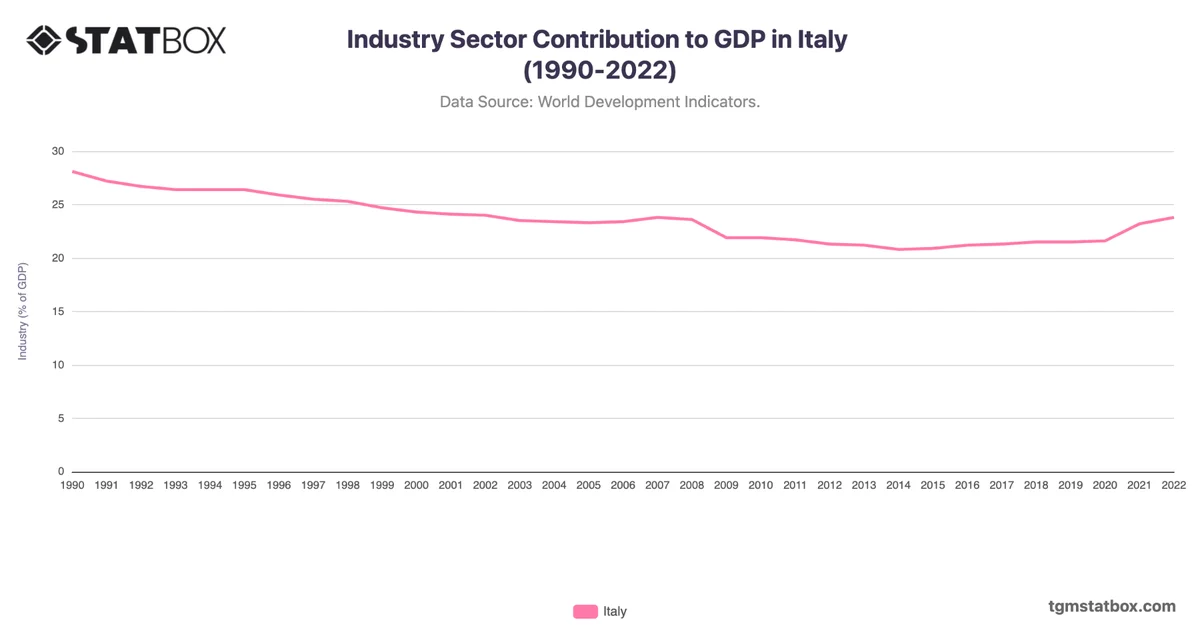
Italy’s agriculture sector saw a steady decrease in GDP share from 3.2% in 1990 to 1.8% in 2022, reflecting a shift toward industrial and service sectors. EU integration in the 1990s led to increased competition and modernization within Italian agriculture, enhancing efficiency but reducing its economic weight. The share stabilized around 2% in recent years, with agriculture continuing to play a role in regional economies, especially in the production of high-value goods like wine, olive oil, and cheese.
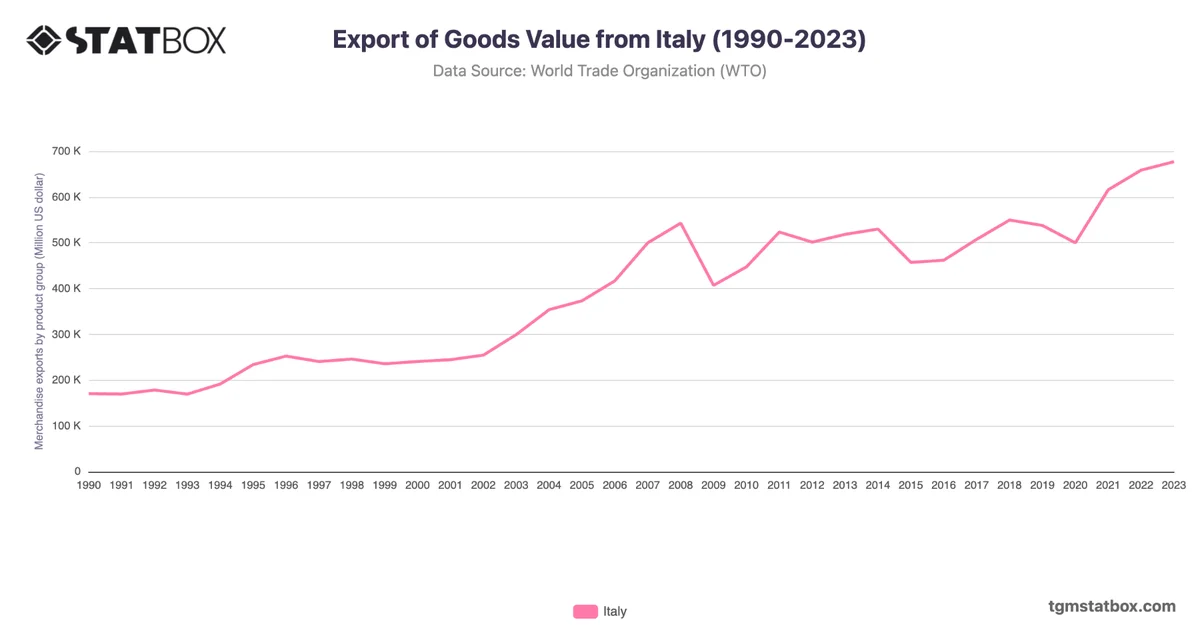
Fluctuations in the sector’s contribution, such as the slight increase to 2.1% in 2013, may reflect favorable weather conditions or high demand for Italian agricultural exports. While agriculture’s GDP share has declined, it remains vital for Italy’s identity and export market.
Fluctuations in the sector’s contribution, such as the slight increase to 2.1% in 2013, may reflect favorable weather conditions or high demand for Italian agricultural exports. While agriculture’s GDP share has declined, it remains vital for Italy’s identity and export market.
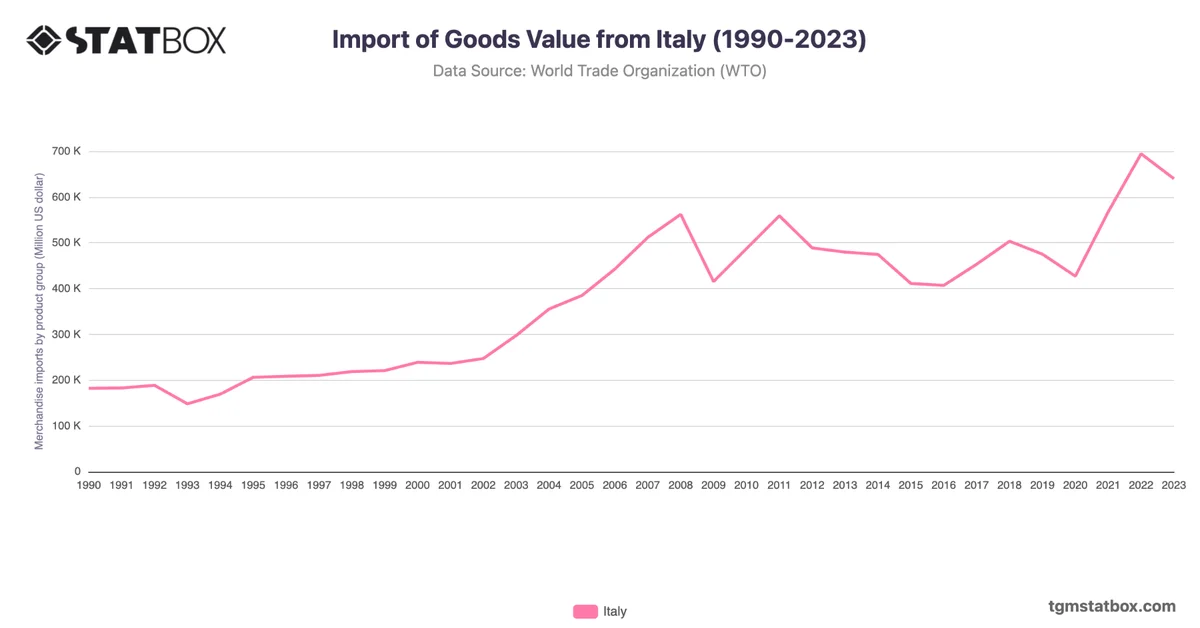
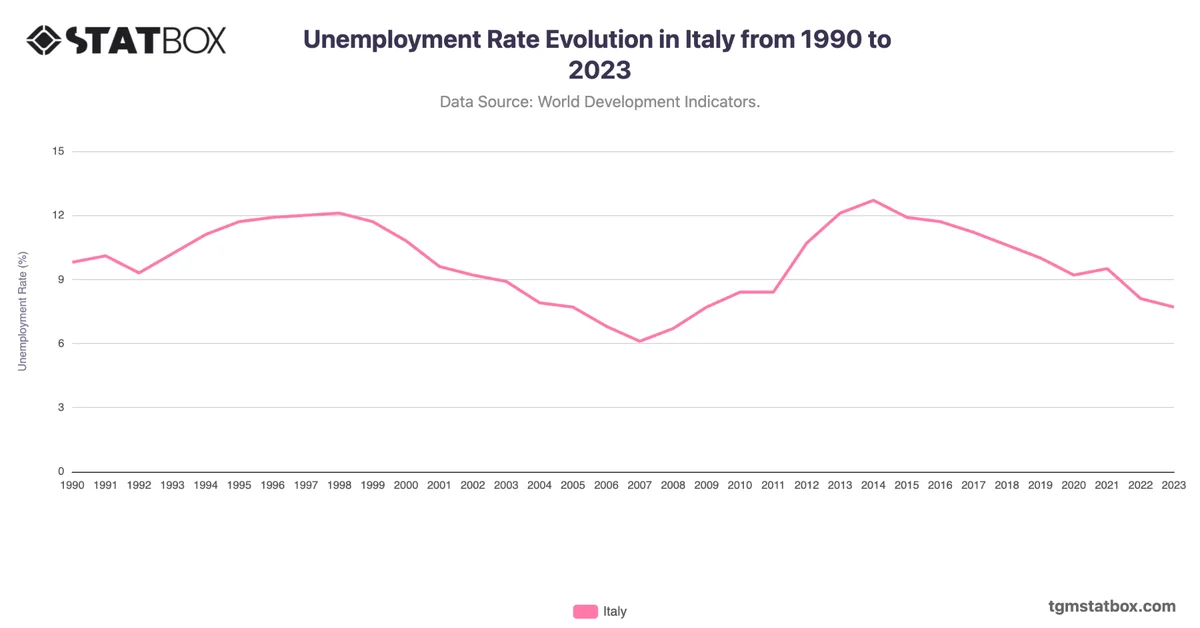
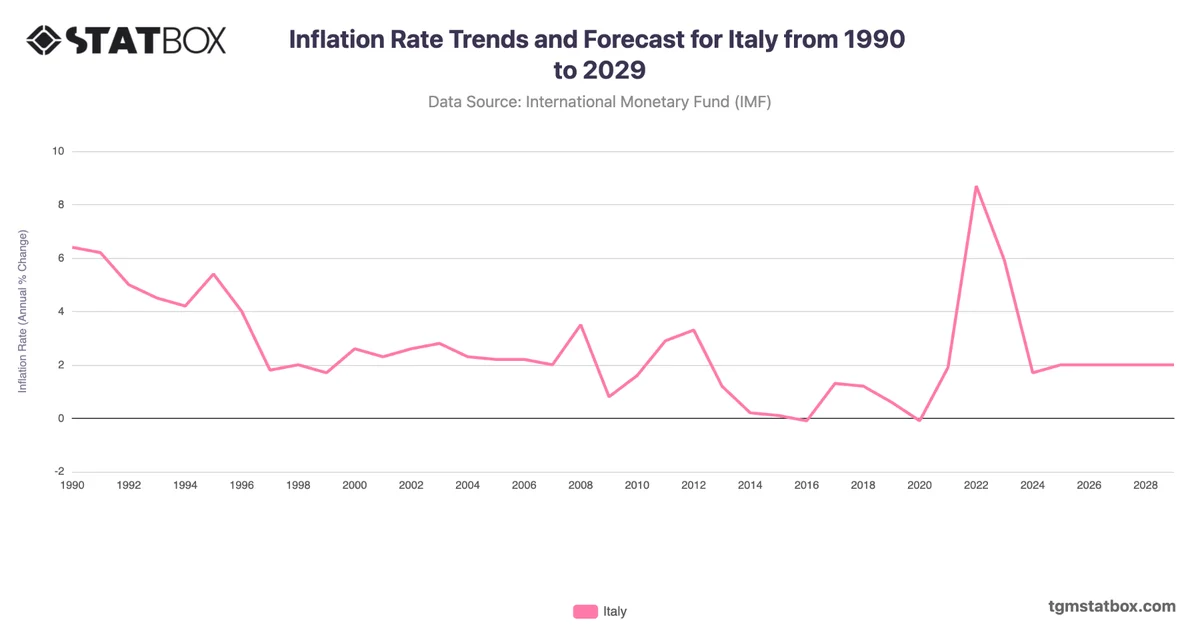
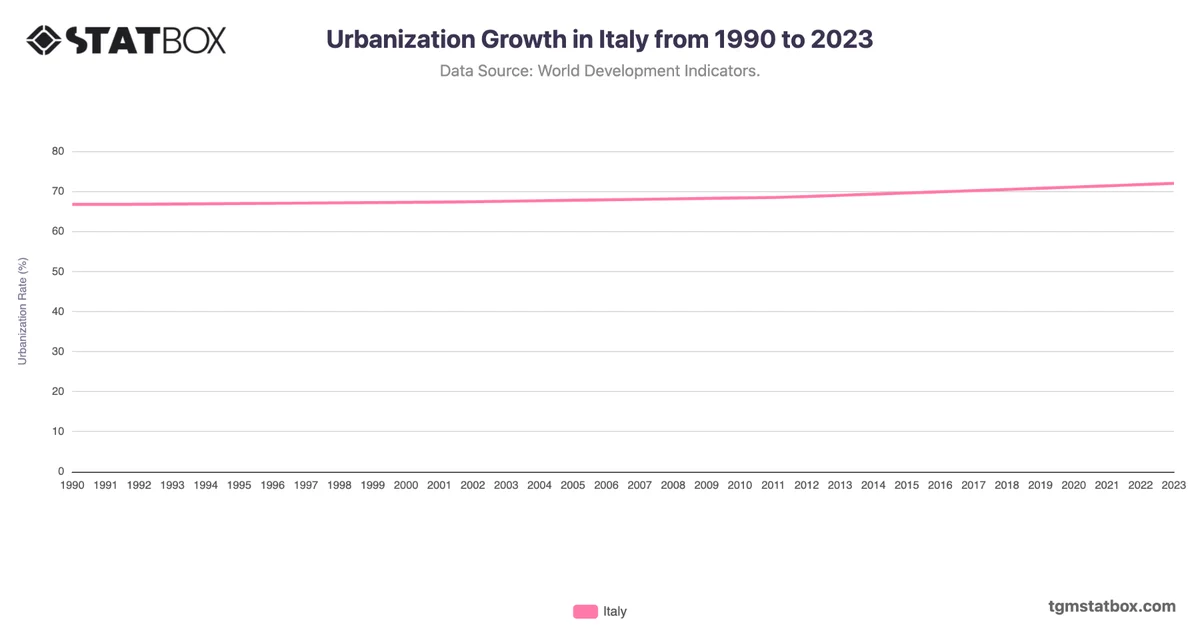
Explore related charts to gain a better understanding of Italy’s military personnel proportion, import value from Italy, Italy’s annual GDP figures.