Chart

Urbanization Growth in Italy from 1990 to 2023

Urbanization Growth in Italy from 1990 to 2023

Share the statistic on social media channels or embed the statistic in your website using "Embed Code", where available.

Share chart

Embed chart
Select Citation

Cite this statistic and select one of the following formats: APA, Chicago, Harvard, MLA & Bluebook


  • APA
  • Chicago
  • Harvard
  • MLA
  • Bluebook
  • IEEE
TGM StatBox. (2024). Urbanization Growth in Italy from 1990 to 2023. TGM StatBox.
Insights

Key Takeaways

Urbanization in Italy grew moderately from 1990 to 2023, influenced by economic and demographic factors. In 1990, urbanization was around 66.7%, with minor annual increases as urban areas continued to expand and industrial activities concentrated in cities. Economic shifts in the late 1990s and early 2000s further encouraged urban growth, reaching 67.5% by 2003. Despite Italy's economic challenges in the 2008 recession, urbanization continued to rise, hitting 68.3% by 2010, as urban infrastructure remained resilient. In the following decade, growth continued as young populations moved toward urban areas for employment, increasing the urban population to 71.0% by 2020. By 2023, urbanization reached 72.0%, marking Italy's steady shift toward urban living despite an aging population and economic shifts, reflecting urbanization's role in Italy's economy and society.

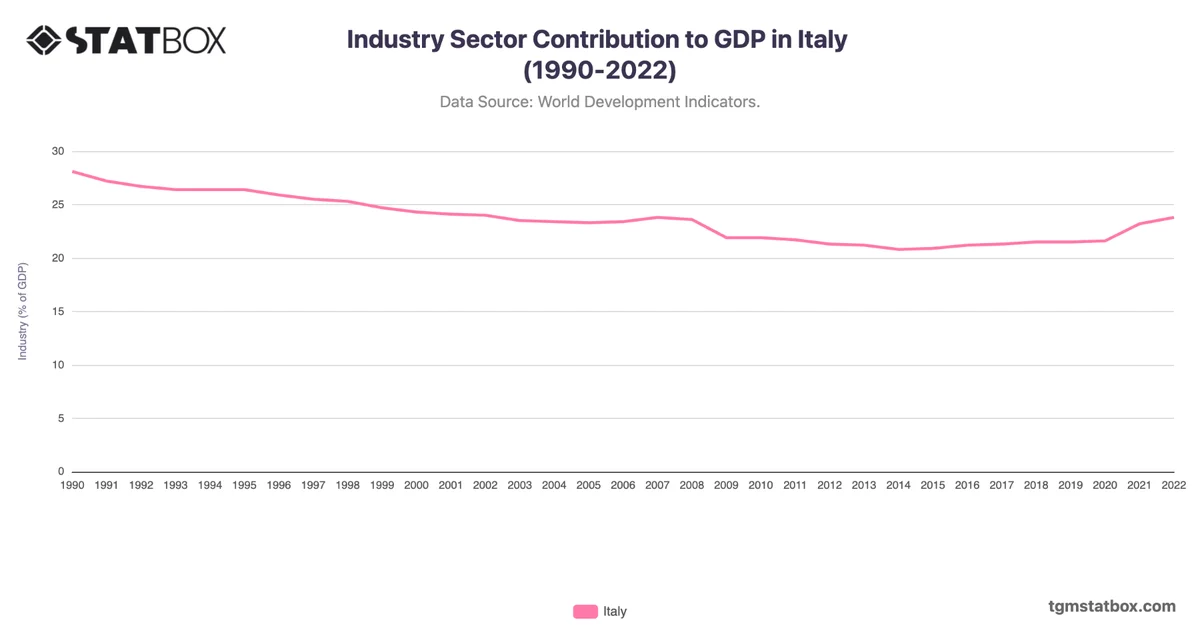
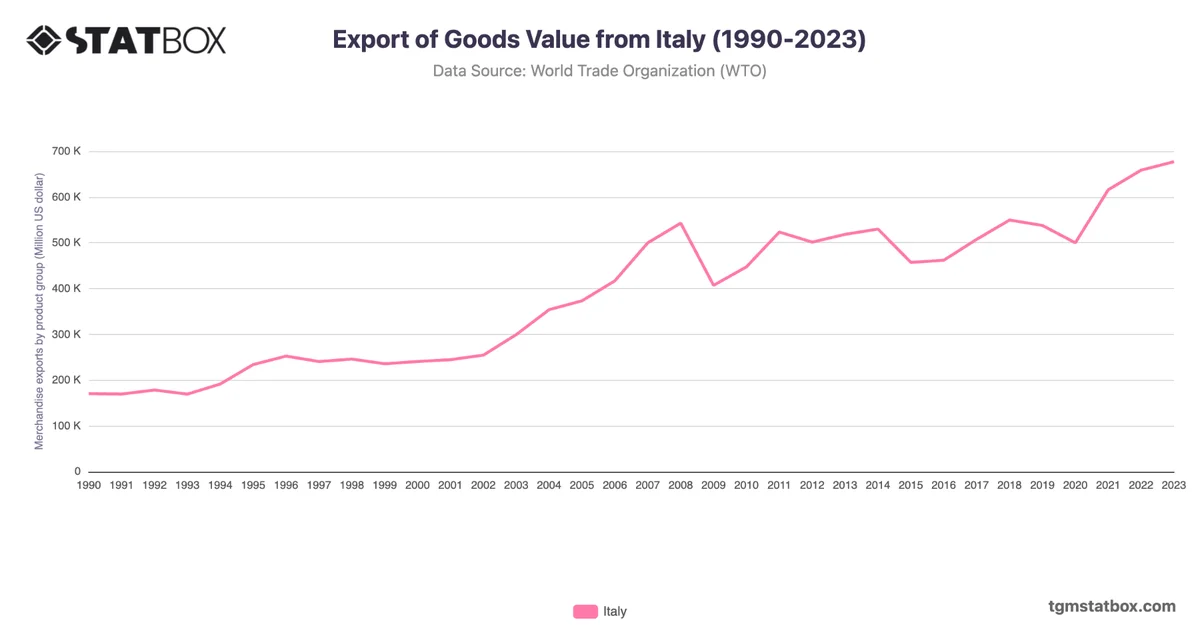
For additional information, visit statistics on Italy’s industry sector share in GDP, Italy’s goods export value, Italy’s unemployment rate trends.

AI-powered chart insight: This summary is automatically generated to help you understand the chart at a glance. It is intended as an overview; view the full chart and underlying data for complete context.

Charts library

Further Recommended Italy Statistics

Statbox vector
The briefing
New data, in your inbox

Consumer insights, data stories and product updates as we publish them. No other mail, and one click to leave.

Roughly two emails a month.

Research services
Have a question our newsroom hasn't answered? Ask it directly.

Our team can run the study behind the story — in 60+ countries, on your question, with the data belonging to you.