Population Growth Trends in the Philippines (1990-2023)
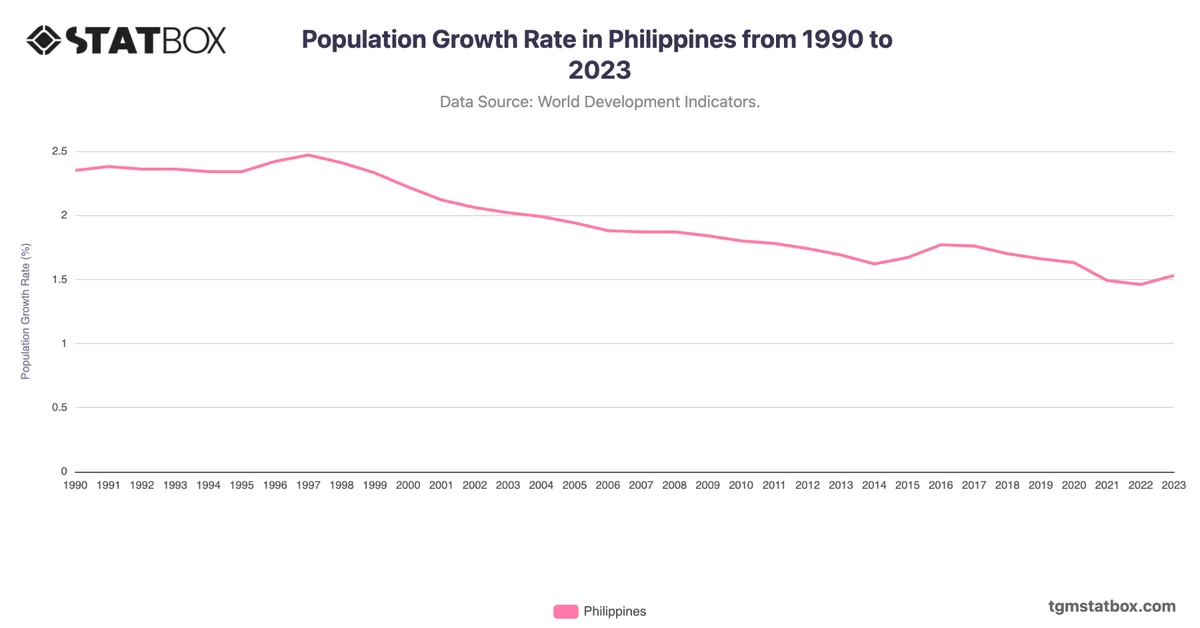
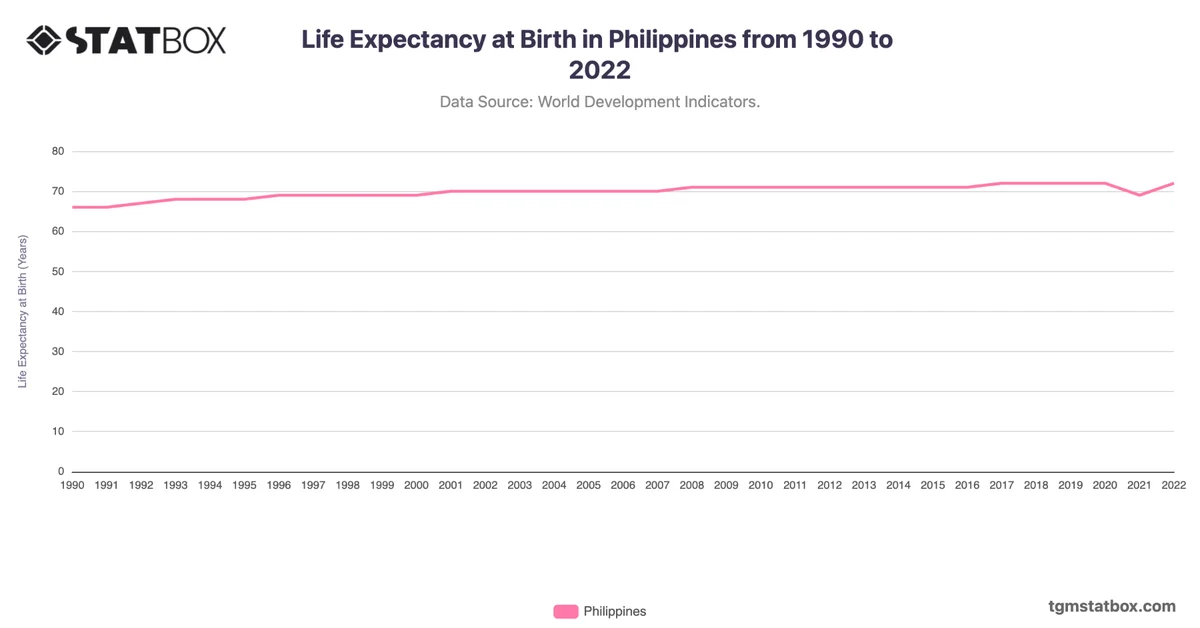
The Philippines saw a strong population increase from approximately 61.5 million in 1990 to over 117 million by 2023. High birth rates, a youthful demographic, and improved healthcare contributed to this expansion. Throughout the 1990s and 2000s, the population grew consistently, reaching 94 million by 2010. Recent government efforts aimed at family planning and urbanization have moderated the growth rate slightly. However, the population continues to expand, supporting a large workforce but also posing challenges in areas such as infrastructure and urban housing as the nation’s economic growth continues.
The Philippines saw a strong population increase from approximately 61.5 million in 1990 to over 117 million by 2023. High birth rates, a youthful demographic, and improved healthcare contributed to this expansion. Throughout the 1990s and 2000s, the population grew consistently, reaching 94 million by 2010. Recent government efforts aimed at family planning and urbanization have moderated the growth rate slightly. However, the population continues to expand, supporting a large workforce but also posing challenges in areas such as infrastructure and urban housing as the nation’s economic growth continues.
Discover additional trends and data on Philippines’ population density, military personnel-to-population ratio in the Philippines, Philippines’ annual GDP growth rate.