Gender Differentiation in Pet Importance Attitudes Across Asia Pacific
Attitudes toward pets vary across cultures and household structures, yet the emotional and social value placed on animal companionship is a consistent dimension of consumer identity in many Asia Pacific markets. Understanding how gender shapes these attitudes has direct relevance for brands, services, and communications targeting pet-owning households.
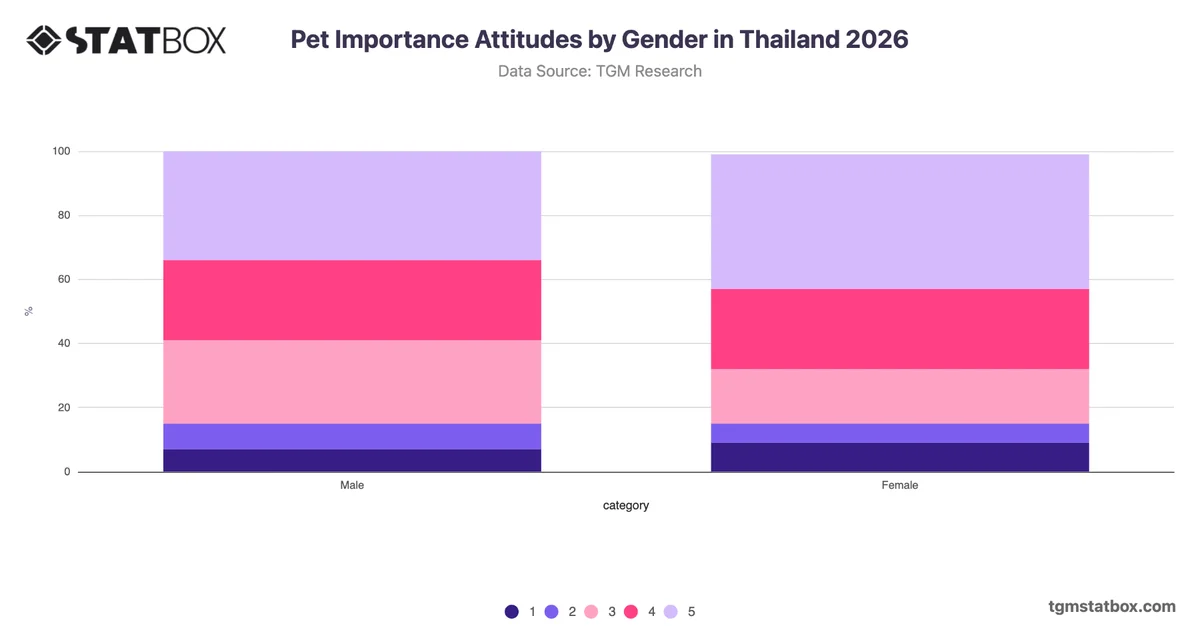
The most notable pattern across Asia Pacific is not a sharp divide between genders but rather a meaningful gap at the level of strong agreement. Female respondents express the highest level of pet importance at 35% for the top response category, compared with 30% among males, a five-percentage-point difference that points to a stronger emotional commitment among women. Both groups, however, show broadly positive orientations, with combined agreement across the top two categories reaching 57% for males and 60% for females. Neutral responses account for roughly a quarter of both groups, suggesting that a segment of the population holds qualified rather than unconditional views on pet centrality. This distinction between broad acceptance and strong personal commitment indicates that communications strategies should be calibrated by intensity of attachment rather than by gender alone, and that segmentation based on ownership depth or emotional investment may be more commercially precise than gender-based targeting.