Vietnam’s mortality rate fell consistently from 37.1 in 1990 to 16.2 in 2022, reflecting the nation’s significant progress in public health and socioeconomic development. By 2000, the rate had dropped to 23.6, driven by government-led initiatives to expand access to basic healthcare and reduce infectious diseases.
Between 2000 and 2022, the decline continued at a steady pace, with the rate reaching 16.2. Investments in healthcare infrastructure, vaccination programs, and maternal health contributed significantly to this improvement. However, Vietnam continues to face challenges such as disparities in rural healthcare access and the rising prevalence of non-communicable diseases.
Between 2000 and 2022, the decline continued at a steady pace, with the rate reaching 16.2. Investments in healthcare infrastructure, vaccination programs, and maternal health contributed significantly to this improvement. However, Vietnam continues to face challenges such as disparities in rural healthcare access and the rising prevalence of non-communicable diseases.
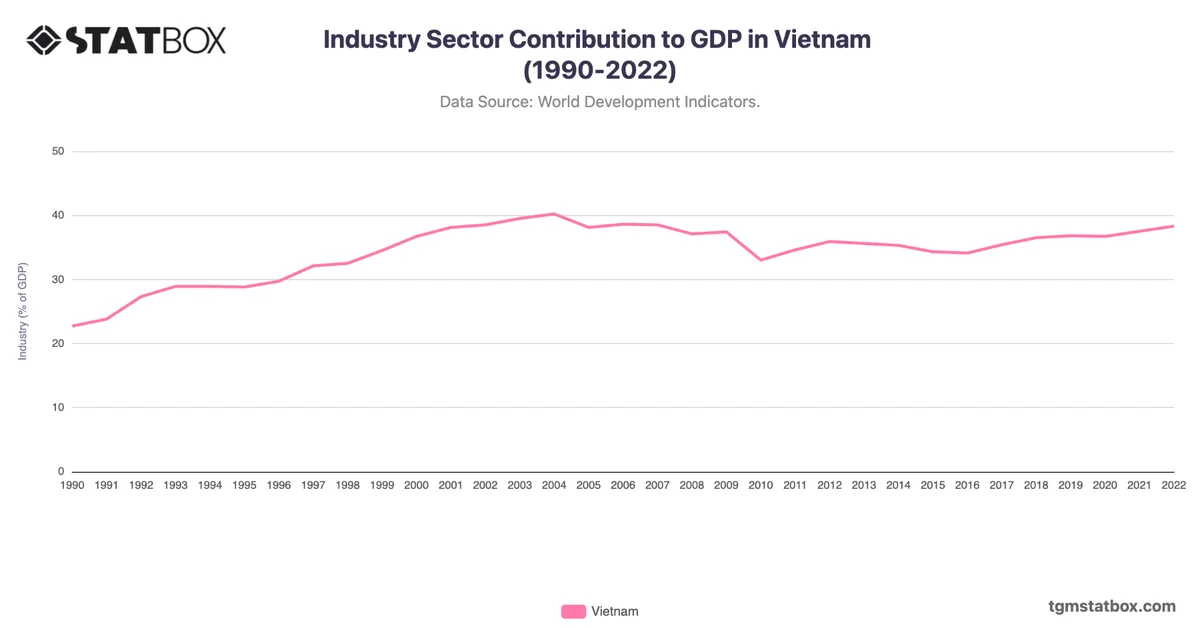
For a deeper dive into the topic, explore Vietnam’s industry sector contribution to GDP, Vietnam’s fertility rate trends, Vietnam’s birth life span.