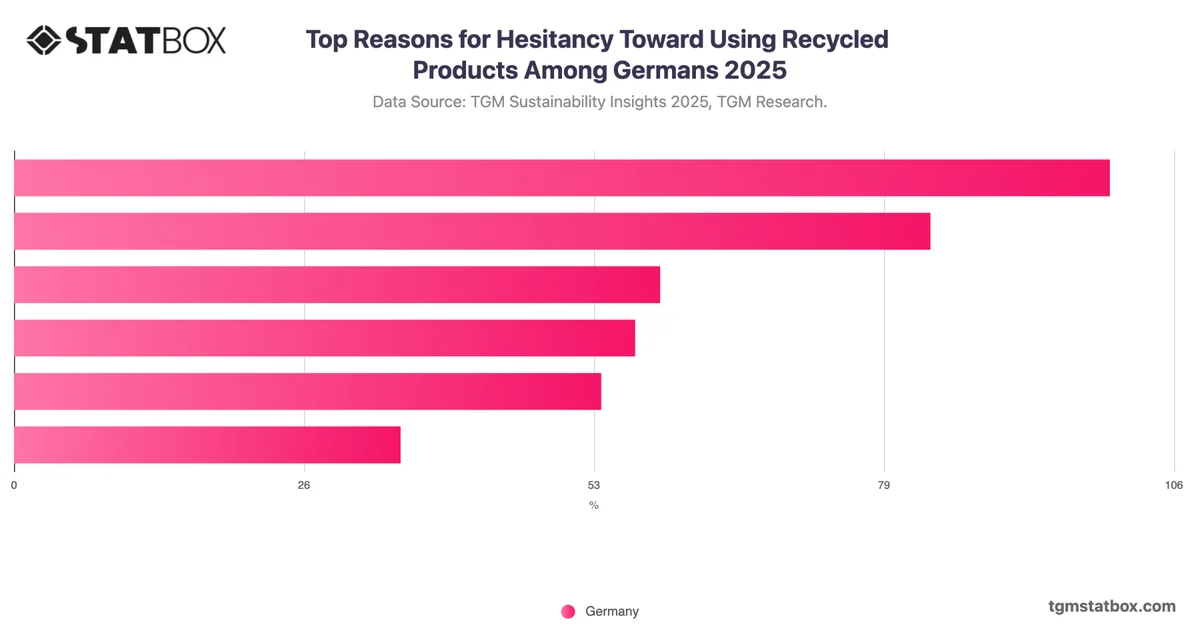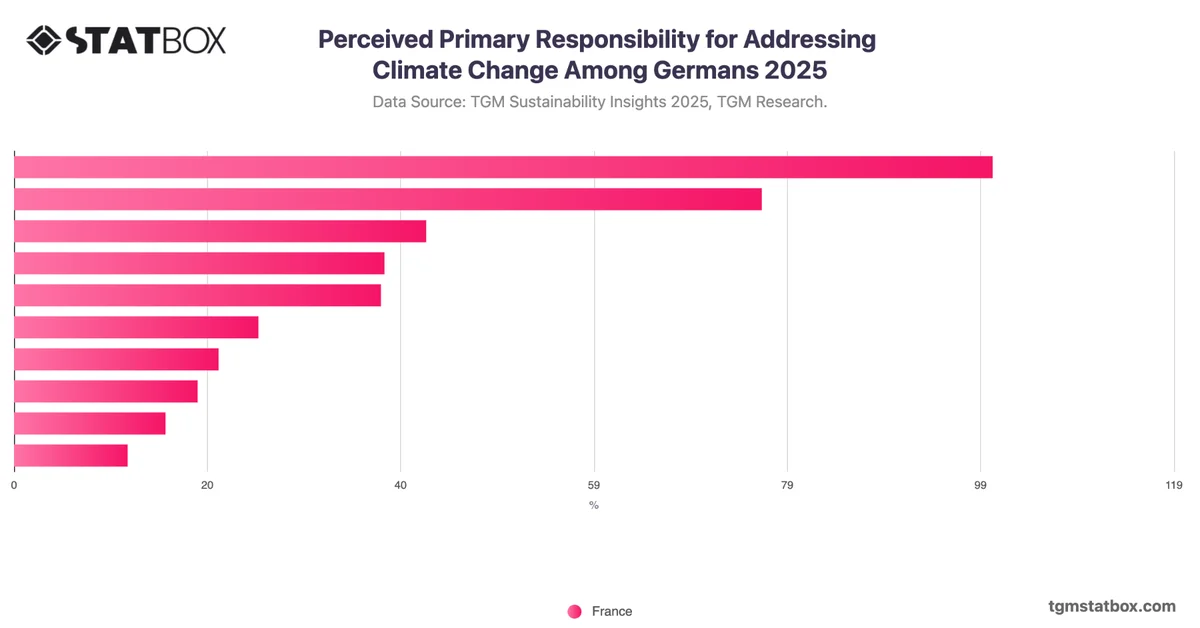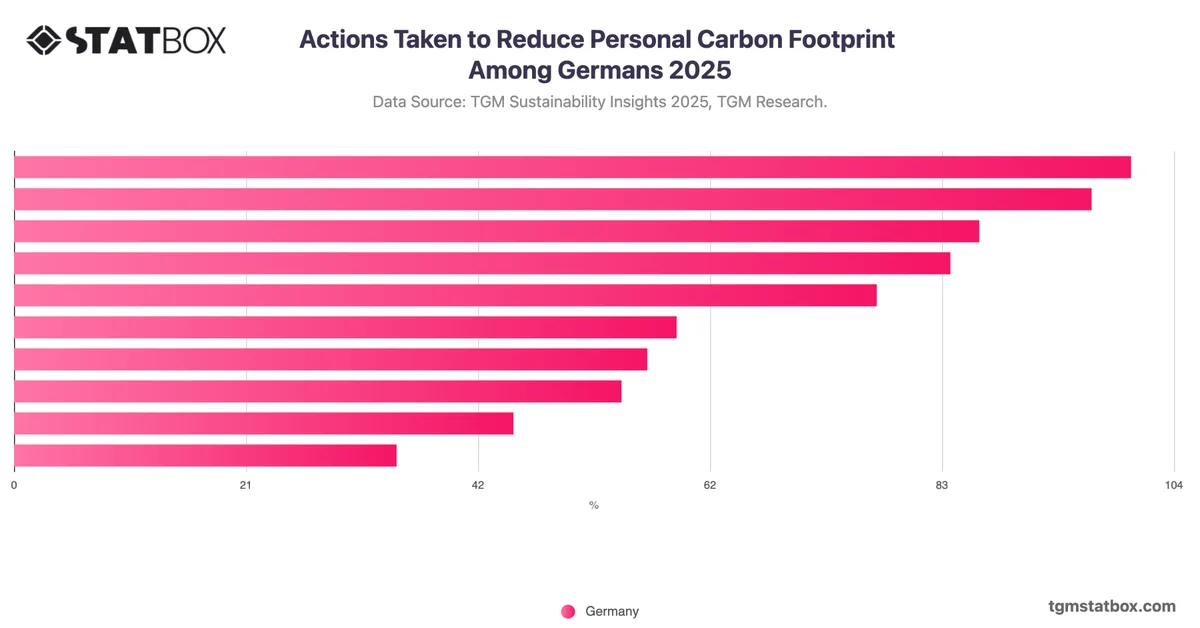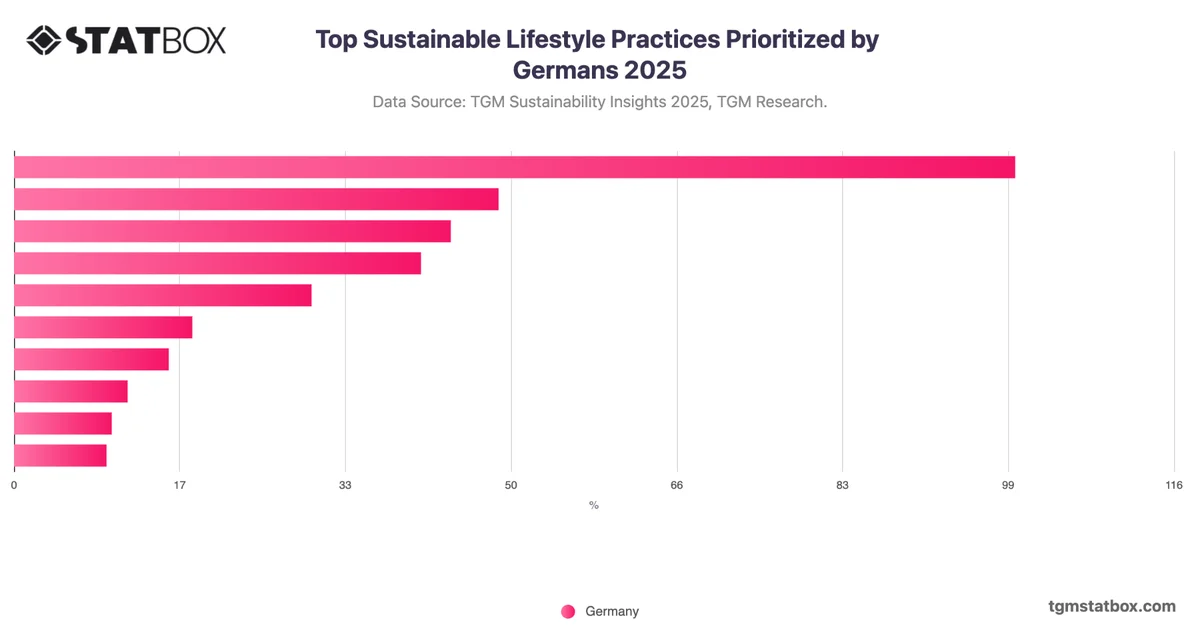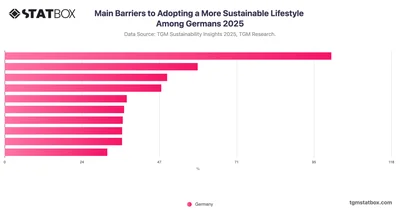
Germany’s path to greener living isn’t blocked by disbelief, it’s stalled by cost, control, and infrastructure that hasn’t yet caught up with intent. At , high costs of eco-friendly products top the list of obstacles, unsurprising in a country where inflation has pushed everyday expenses to multi-year highs. Public transport shortcomings () rank second, revealing cracks in a system often seen as efficient, especially in rural areas left out of Germany’s €49 Deutschlandticket scheme. Renters face another wall: cite limited influence over housing choices, reflecting frustration in cities like Berlin where solar panels or insulation upgrades are out of reach. Supply gaps, old habits, and doubts about personal impact all hover around , showing that even in a well-informed society, motivation isn't always matched by feasibility.
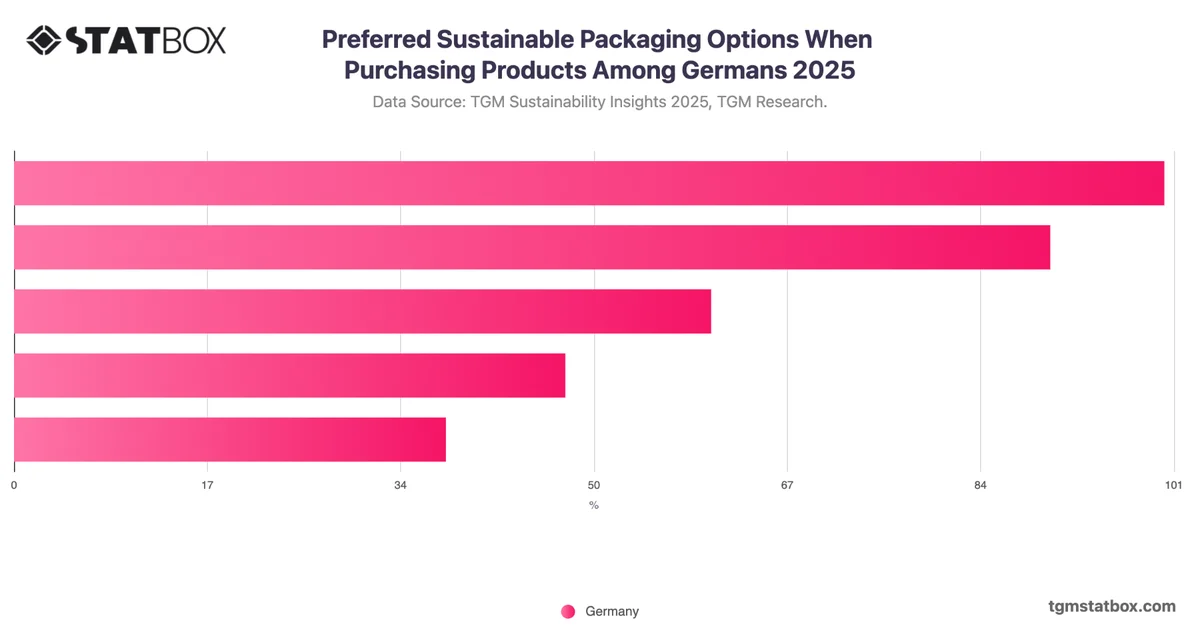
For a deeper dive into the topic, explore Germans’ climate change concern, Germans’ reluctance to use recycled products, Germans’ preferred sustainable packaging options.