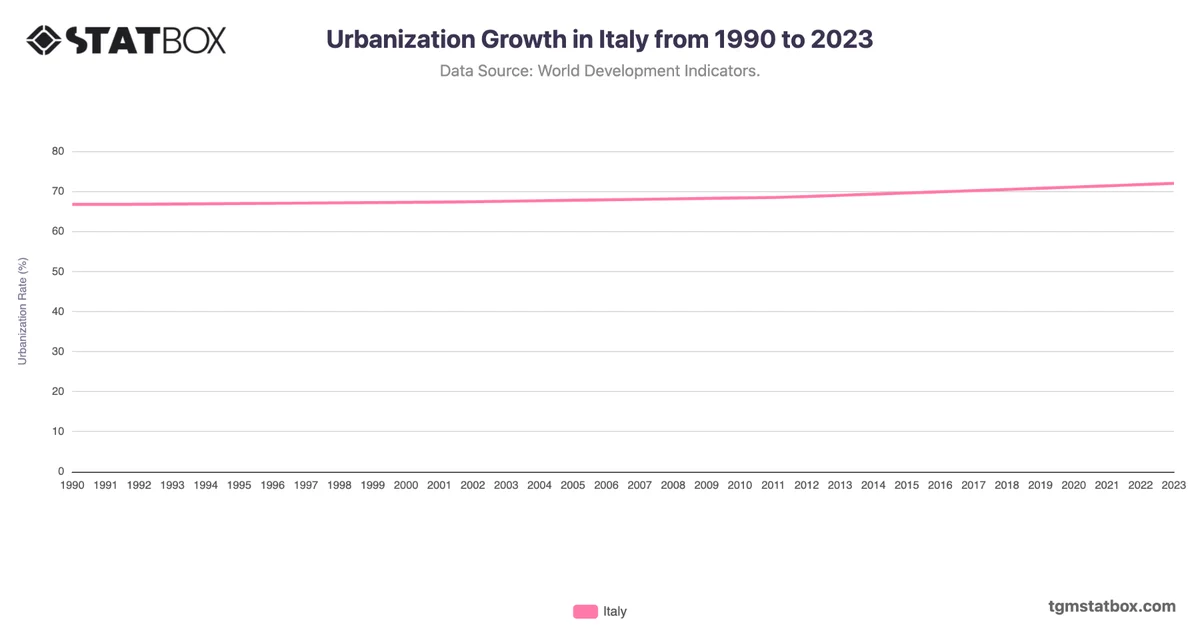
Italy’s median age has increased significantly from 39.2 years in 2000 to a forecasted 50.0 years by 2030, reflecting one of the most advanced aging processes in Europe. The median age climbed from 39.2 to 42.5 between 2000 and 2010, largely due to low birth rates and a high life expectancy. Italy’s urbanization and economic development have led to lifestyle changes that support smaller family units and delayed childbearing, contributing to an older age structure.
From 2010 onwards, Italy’s median age continued to rise sharply, reaching 47.5 by 2023. This increase is expected to continue, with a median age of 50.0 by 2030, as Italy grapples with low fertility and extended longevity. The aging population poses challenges for Italy’s social and economic landscape, particularly in terms of labor force participation and healthcare resources.
From 2010 onwards, Italy’s median age continued to rise sharply, reaching 47.5 by 2023. This increase is expected to continue, with a median age of 50.0 by 2030, as Italy grapples with low fertility and extended longevity. The aging population poses challenges for Italy’s social and economic landscape, particularly in terms of labor force participation and healthcare resources.
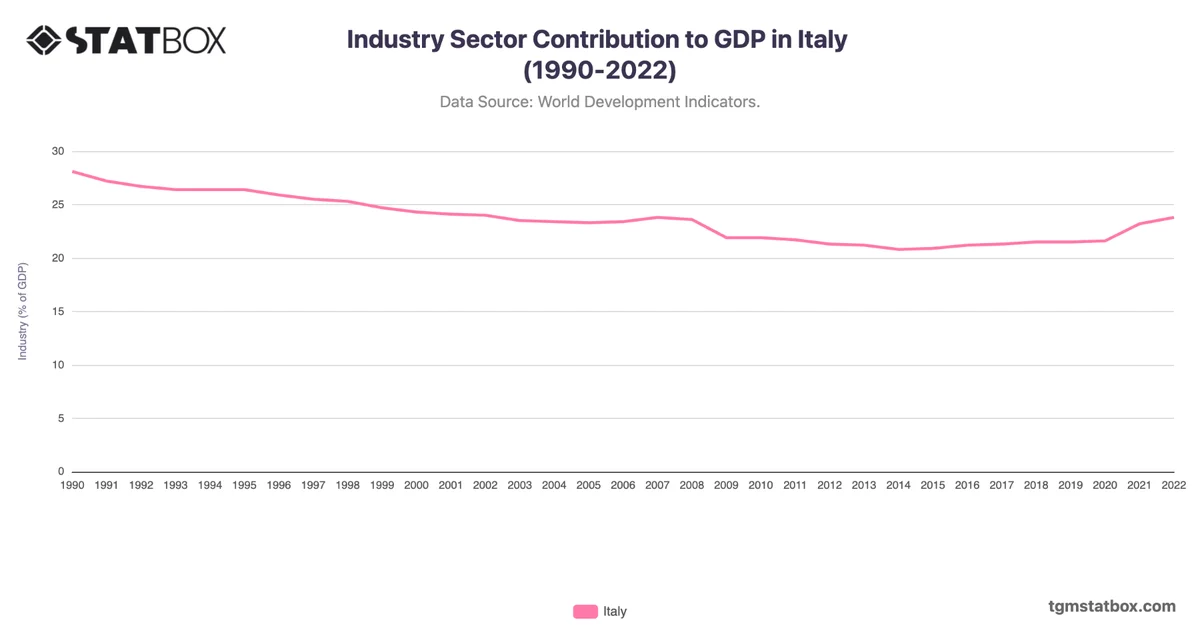
For a broader context, visit other statistics on Italy’s industry sector share in GDP, Italy’s population growth rate, Italy’s annual GDP growth rate.