Peru's fertility rate declined steadily from 3.9 in 1990 to 2.2 in 2022, reflecting broader demographic and economic changes. The 1990s saw significant reductions, with rates dropping nearly 1 percentage point over the decade, influenced by increased access to family planning and improvements in women's education. Economic reforms during this period also likely contributed to shifting household priorities toward smaller families.
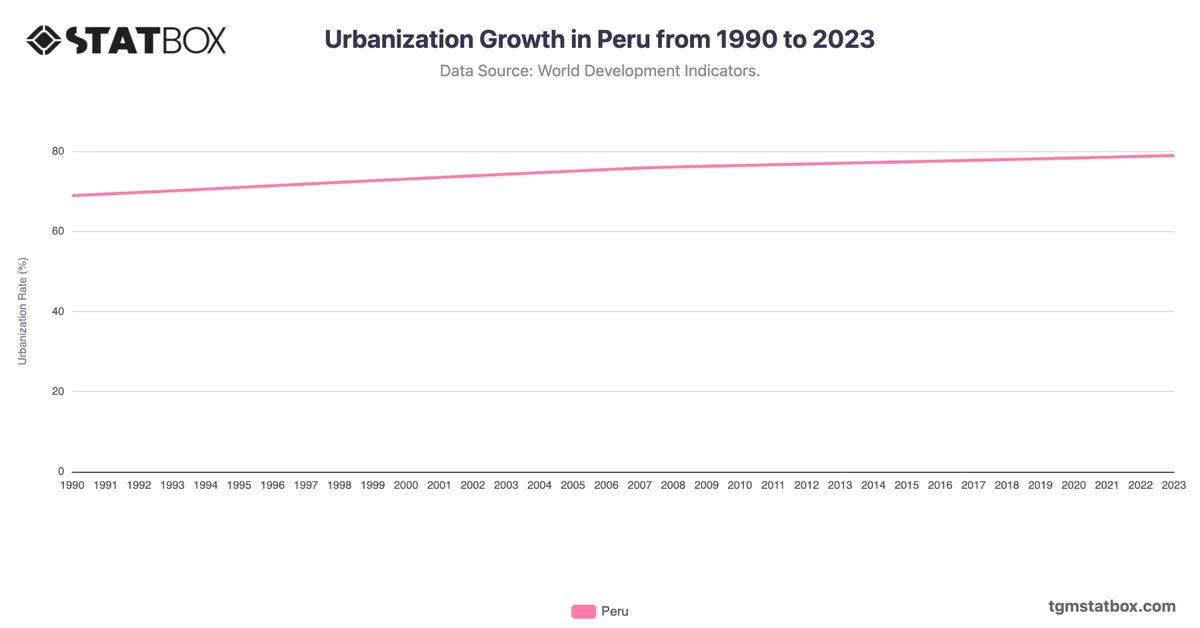
From the 2000s onward, the decline slowed, stabilizing at around 2.7 between 2002 and 2007. The plateau during this time may be attributed to consistent rural-urban fertility disparities and the gradual pace of infrastructure and healthcare improvements in remote areas. Post-2010, the fertility rate resumed its decline, aligning with Peru's ongoing urbanization and increasing labor force participation by women.
From the 2000s onward, the decline slowed, stabilizing at around 2.7 between 2002 and 2007. The plateau during this time may be attributed to consistent rural-urban fertility disparities and the gradual pace of infrastructure and healthcare improvements in remote areas. Post-2010, the fertility rate resumed its decline, aligning with Peru's ongoing urbanization and increasing labor force participation by women.
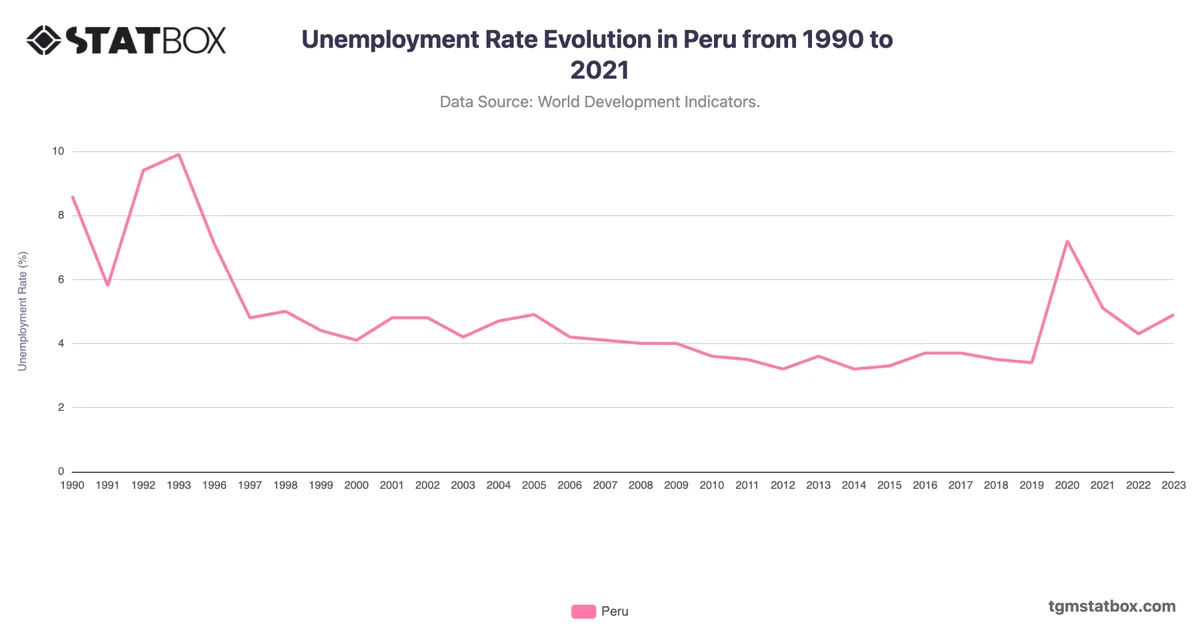
Find out more through related statistics on Peru’s population density, Peru’s unemployment rate, Peru’s military share in population.