66.26% of Germans are concerned about climate change.
30% of Germans prioritize minimizing water usage in daily life.
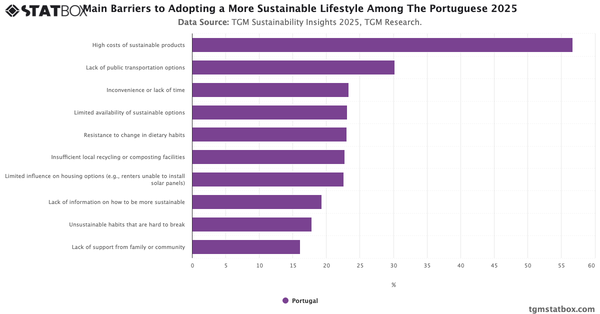
High costs are the main barrier to adopting sustainable lifestyles.
Awareness of the 3R concept in Germany is limited.


Germany Sustainability Insights Report 2024
Learn more about sustainability insights in Germany with TGM StatBox. Explore in-depth insight report, featuring user behavior, trends, and preferences.
Go to report
In Germany, climate change is on people’s minds, but urgency is not very strong. About three in ten say they are moderately concerned, while only 14% describe themselves as extremely concerned. Most fall somewhere in the middle—aware of the problem but not feeling it as an immediate personal crisis.
Because of this mix of moderate concern and everyday barriers, many Germans choose steady, practical habits instead of bigger or more costly changes.
This measured approach shows up in daily life. Water conservation is the top priority (30%), followed by plant-based diets (15%) and eco-friendly household products (13%). Recycling, composting, and energy saving are also common. Bigger steps, like renewable energy investment or community clean-ups, are rare, reflecting a preference for changes that feel manageable at home.
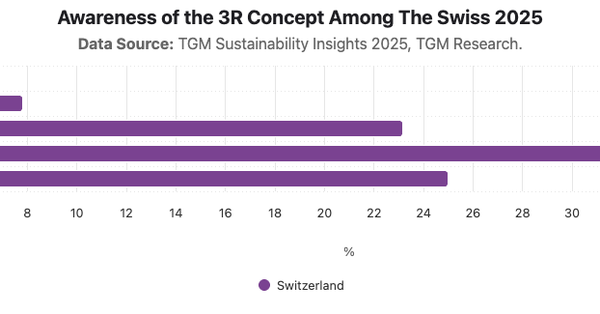
Nearly half of Germans say they’ve never heard of the “Reduce, Reuse, Recycle” framework, and only a small share claim to fully understand it. Yet when asked how they apply the 3Rs in daily life, reuse (46%) and recycling (46%) emerge as the most common practices, followed closely by waste reduction and composting.
This creates a clear opportunity: rather than focusing only on abstract awareness campaigns, businesses and policymakers can scale up what people already do. In Germany, models already exist, such as the Pfand system, where bottles and cans are returned for a deposit refund, or supermarket refill stations that let customers bring containers for everyday items. Expanding these kinds of systems, and making them more rewarding or convenient, could strengthen existing habits and turn them into bigger collective impact.
*Disclaimer: The information provided by TGM StatBox is intended for general informational purposes only. TGM StatBox does not assume liability for the completeness or accuracy of the information provided. Due to frequent updates, statistics may be more current than mentioned in the text. Please independently verify the information and consult experts as needed.




Connect with our expert team for immediate assistance or comprehensive market analysis. We are always ready to support your business needs.