48% of Irish people are somewhat interested in sustainable practices.
High costs are the leading barrier to adopting sustainable lifestyles.
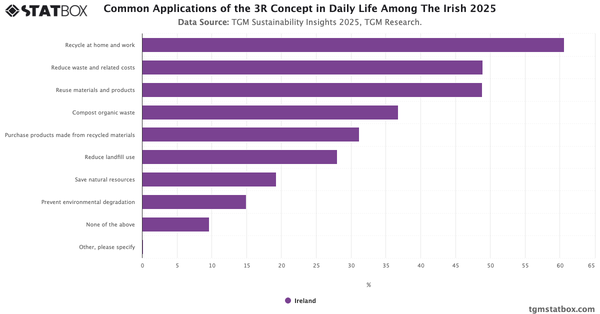
59% of respondents actively recycle and compost.
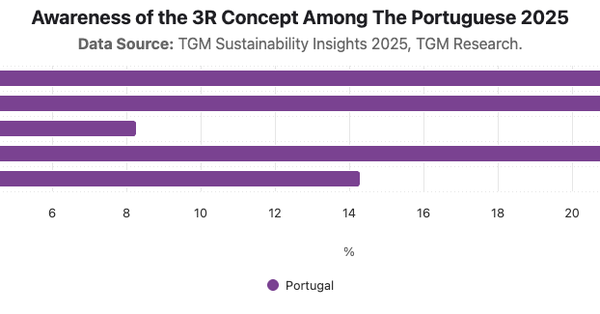
Awareness of the 3R concept is low, with 41% unfamiliar.
16% of Irish people express extremly concern about climate change.


Ireland Sustainability Insights Report 2024
Discover how people in Ireland think and act on sustainability. TGM delivers localized, data-driven insights to support responsible business decisions and global impact.
Go to report
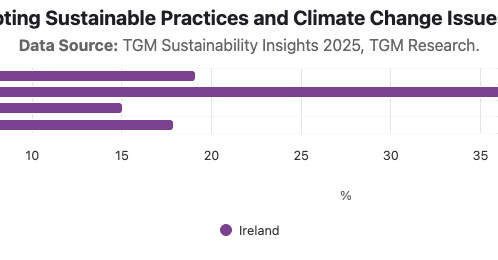
In Ireland, many people care about sustainability, almost 67% show some level of interest. But for most, it feels more like something they should do rather than something they must do. Fewer than one in five say they are very engaged, and only 16% describe themselves as extremely concerned about climate change.
Money is the biggest barrier, almost half say sustainable products are too expensive. This is especially important in Ireland, where high energy bills and housing costs already put pressure on households. Even when people want to choose greener options, many say they cannot afford the higher price. Outside Dublin, limited public transport also makes it hard to avoid driving, even for those who would prefer lower-carbon options.
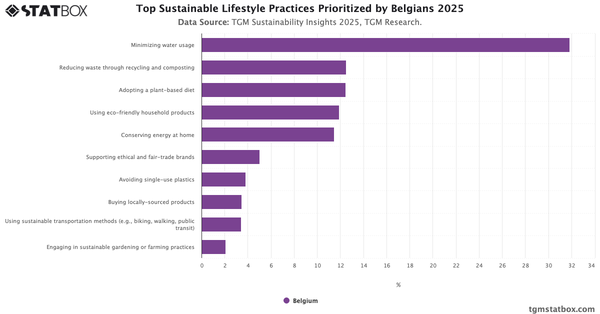
When asked how they reduce their carbon footprint, Irish households point first to recycling and composting, followed by saving water and using energy-efficient appliances. These actions are practical, familiar, and easy to fit into daily routines, which makes them far more attractive than costly or disruptive lifestyle changes.
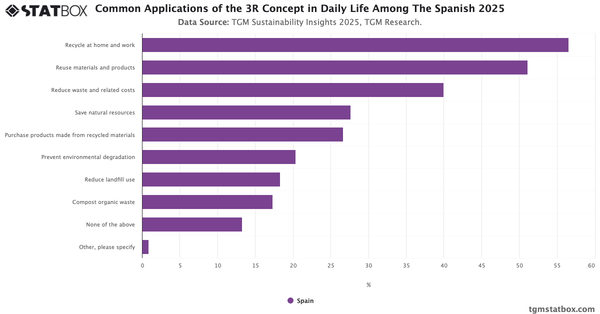
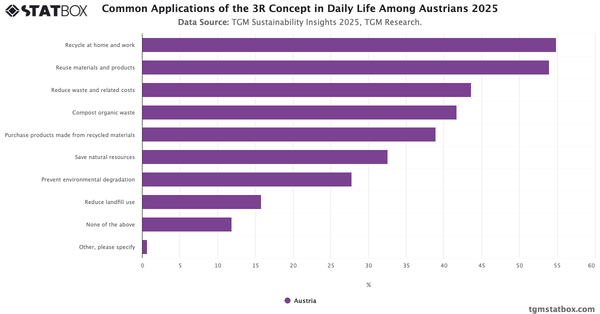
Even though recycling is widespread, knowledge of the “Reduce, Reuse, Recycle” idea is low. Four in ten say they’ve never heard of it, and only 15% say they know it well. For businesses, this creates a clear opportunity: instead of relying on abstract education, brands can tap into behaviors people already practice.
For example:
- The national Deposit Return Scheme (Re-turn) in Ireland uses reverse vending machines in supermarkets like SuperValu and Centra, giving consumers instant rewards for returning bottles and cans.
- Coca-Cola’s reverse vending machines in Europe give consumers vouchers or discounts when they return bottles.
- Lush rewards customers who bring back used pots with free products, directly linking recycling to loyalty.
- Danone and local co-ops connect composting to food systems, turning food waste into fertilizer for local farms.
By building on ingrained habits like recycling and reuse, businesses can meet consumers where they already are, turning routine actions into stronger, branded sustainability engagement.
*Disclaimer: The information provided by TGM StatBox is intended for general informational purposes only. TGM StatBox does not assume liability for the completeness or accuracy of the information provided. Due to frequent updates, statistics may be more current than mentioned in the text. Please independently verify the information and consult experts as needed.




Connect with our expert team for immediate assistance or comprehensive market analysis. We are always ready to support your business needs.