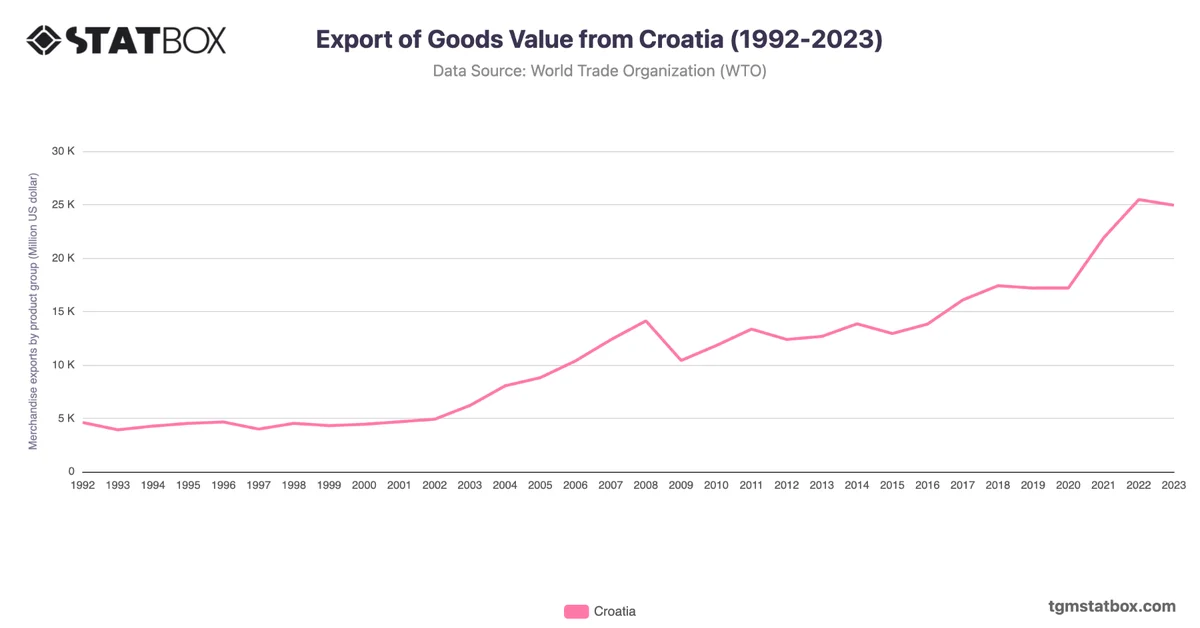
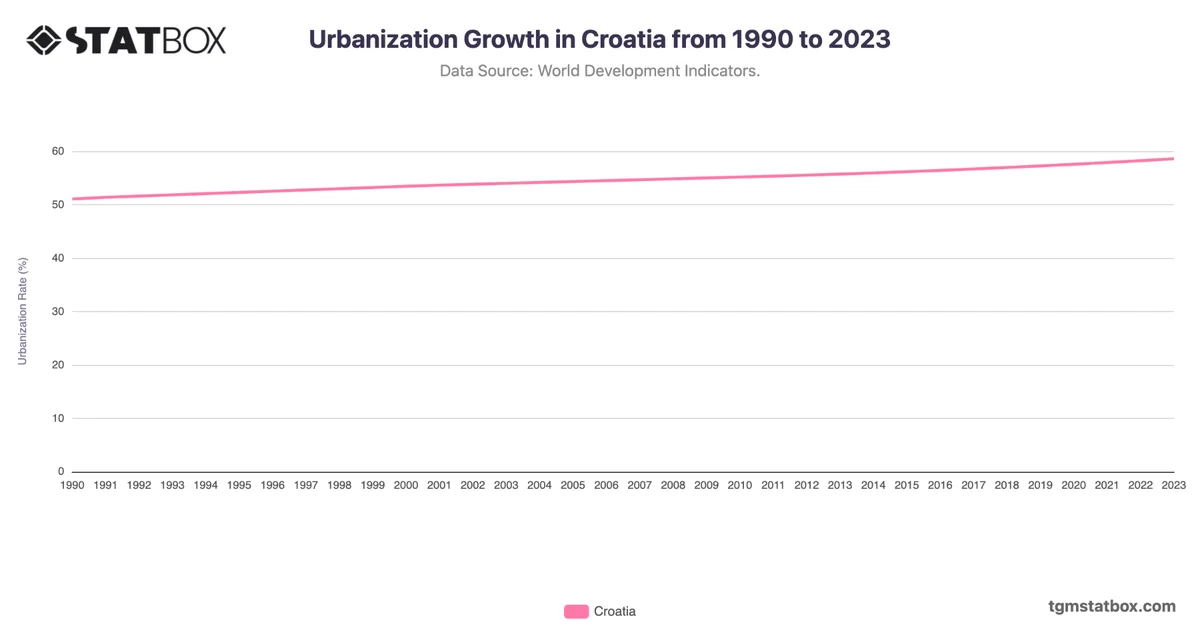
Croatia’s population density fluctuated between 82 and 77 people per square kilometer from 1992 to the early 2000s, reflecting a period of stabilization after the Croatian War of Independence (1991–1995). The aftermath of the war led to decreased population growth, especially in urban areas that experienced population shifts and migration. By 2000, the density had dropped to around 77 people per square kilometer, stabilizing as urbanization slowly resumed in major cities like Zagreb and Split.
From 2010 onwards, Croatia’s population density began a gradual decline, reaching 69 people per square kilometer in 2021. Factors such as emigration, a declining birth rate, and slower urban expansion contributed to this trend. Economic migration to other European Union countries post-2013 also played a role in reducing density, as Croatia joined the EU and citizens sought job opportunities abroad, leading to a continued drop in population density.
From 2010 onwards, Croatia’s population density began a gradual decline, reaching 69 people per square kilometer in 2021. Factors such as emigration, a declining birth rate, and slower urban expansion contributed to this trend. Economic migration to other European Union countries post-2013 also played a role in reducing density, as Croatia joined the EU and citizens sought job opportunities abroad, leading to a continued drop in population density.
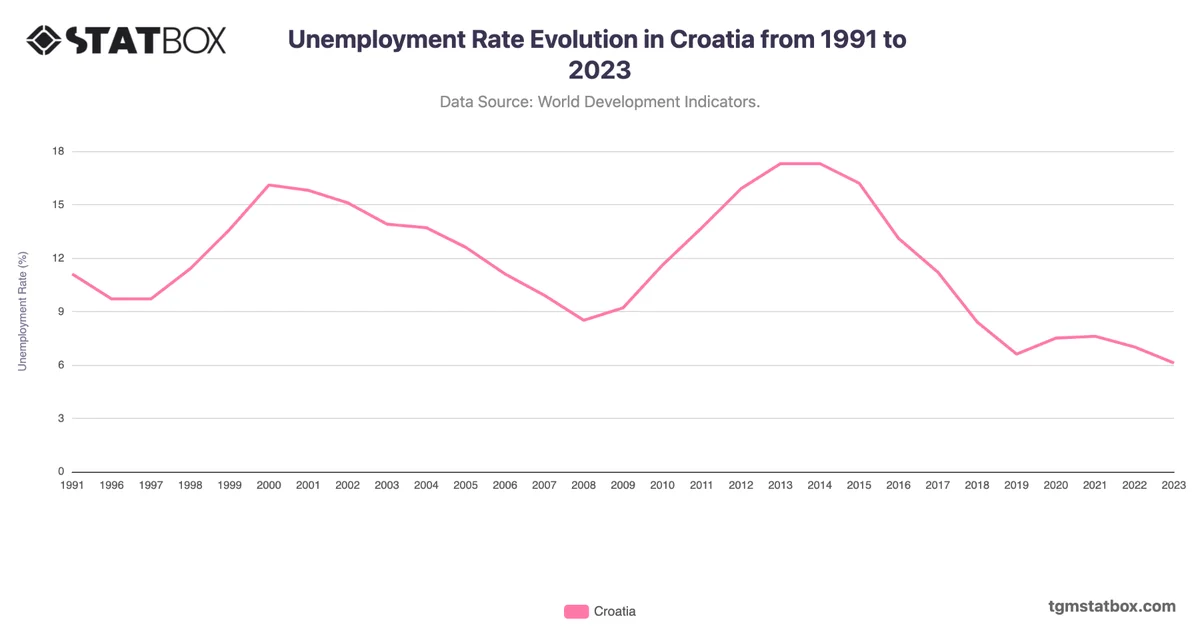
Gain a broader perspective by reviewing Croatia’s annual GDP growth rate, Croatia’s military personnel share, Croatia’s unemployment rate.