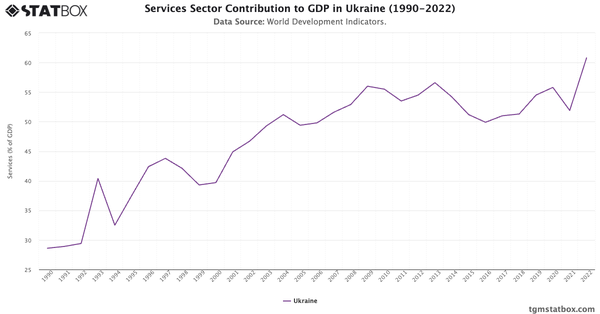
66% of Ukrainians express concern over climate change.
Over 60% are interested in sustainability practices.
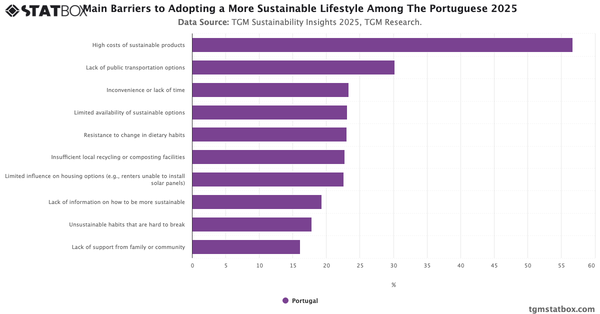
High costs and infrastructure issues are major adoption barriers.
53% of Ukrainians prioritize conserving energy in their daily practices.
59% use energy-efficient appliances to reduce their carbon footprint.


Ukraine Sustainability Insights Report 2024
Learn more about sustainability insights in Ukraine with TGM StatBox. Explore in-depth insight report, featuring user behavior, trends, and preferences.
Go to report
For Ukrainians, sustainability is rooted in energy security and daily resilience. The most common actions include using energy-efficient appliances (59%), relying on public transport or biking (49%), and buying local food (38%). Recycling and plant-based diets are less common, but everyday conservation, like saving water and adjusting heating, remains central.
Climate concern is present but muted: most Ukrainians are only “slightly” (37%) or “moderately” concerned (30%), while just 5% are “extremely concerned.” Interest follows the same pattern, 40% are “somewhat interested,” but only 12% are “very interested,” and nearly half are indifferent or uninterested. To drive engagement, sustainability messaging must connect directly to immediate benefits, such as lower household bills, better air quality, healthier diets, stronger community resilience, rather than distant global narratives.
The biggest challenges are structural: high costs of sustainable products, poor recycling facilities, and weak public transport in some areas. Lack of time, information, and entrenched habits also hold people back. War damage deepens the picture. Waste management systems were disrupted in cities like Kharkiv and Mykolaiv. Public transport in many regions remains limited. Even where intent exists, structural gaps block follow-through.
These are not issues of willpower, but of infrastructure gaps and affordability. Ukraine’s transition depends on rebuilding infrastructure sustainably, especially waste management, housing, and public transport. International donors and businesses have an opportunity to embed green systems into reconstruction, making them accessible and affordable for households.
*Disclaimer: The information provided by TGM StatBox is intended for general informational purposes only. TGM StatBox does not assume liability for the completeness or accuracy of the information provided. Due to frequent updates, statistics may be more current than mentioned in the text. Please independently verify the information and consult experts as needed.




Connect with our expert team for immediate assistance or comprehensive market analysis. We are always ready to support your business needs.