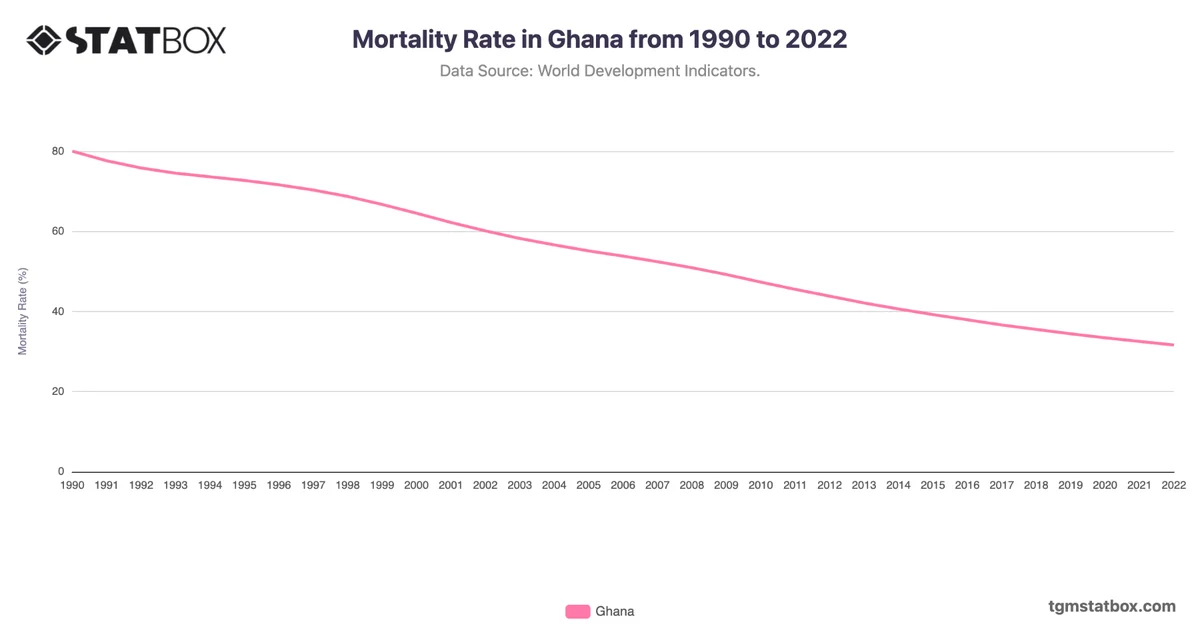
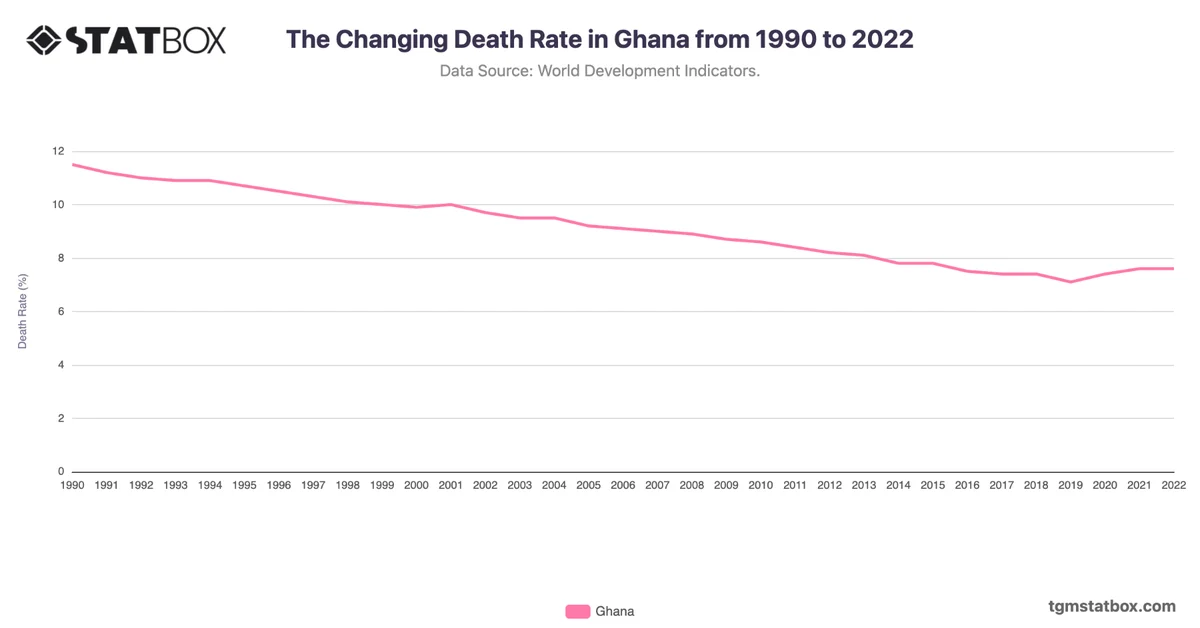
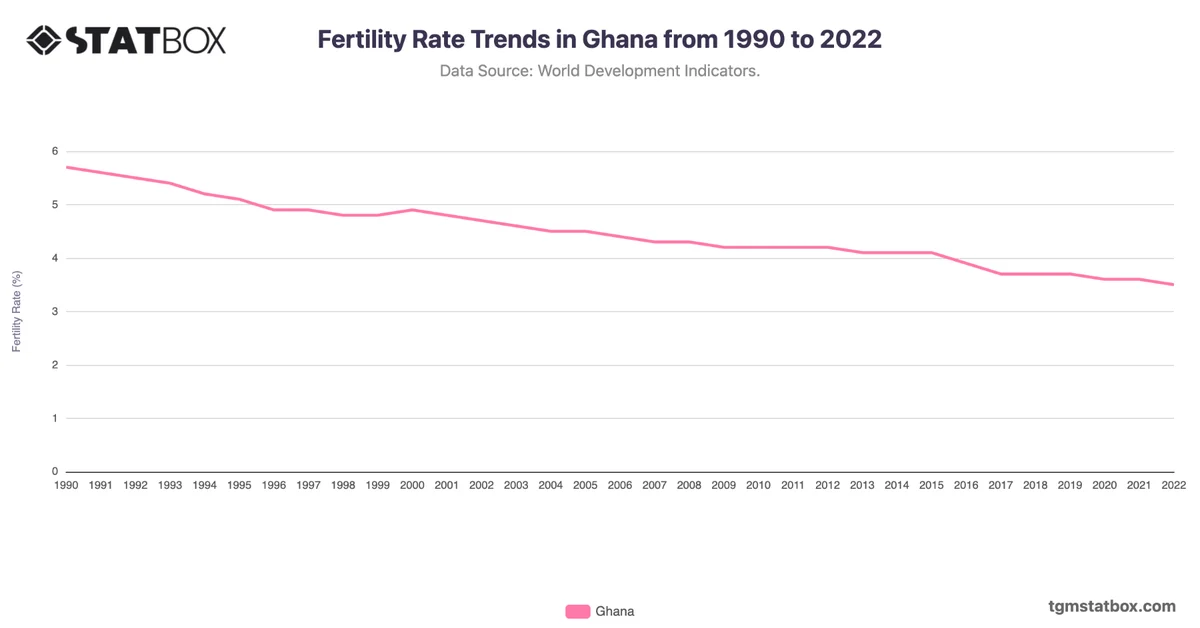
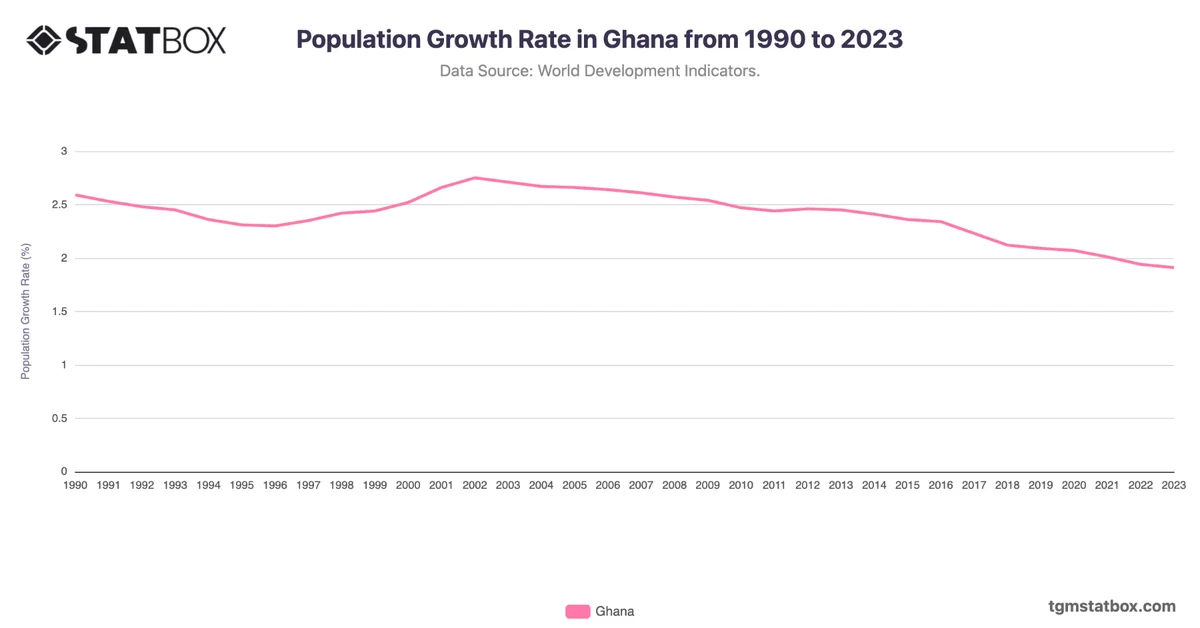
Ghana’s population has steadily increased from around 15.4 million in 1990 to over 34.1 million in 2023. Several factors have influenced this significant growth over the decades, including political stability, economic expansion, and improved healthcare systems. During the 1990s, Ghana began transitioning to democracy, with its first democratic elections in 1992. This political stability laid the foundation for economic reforms and growth, attracting investments and enabling infrastructure development, which in turn supported population growth.
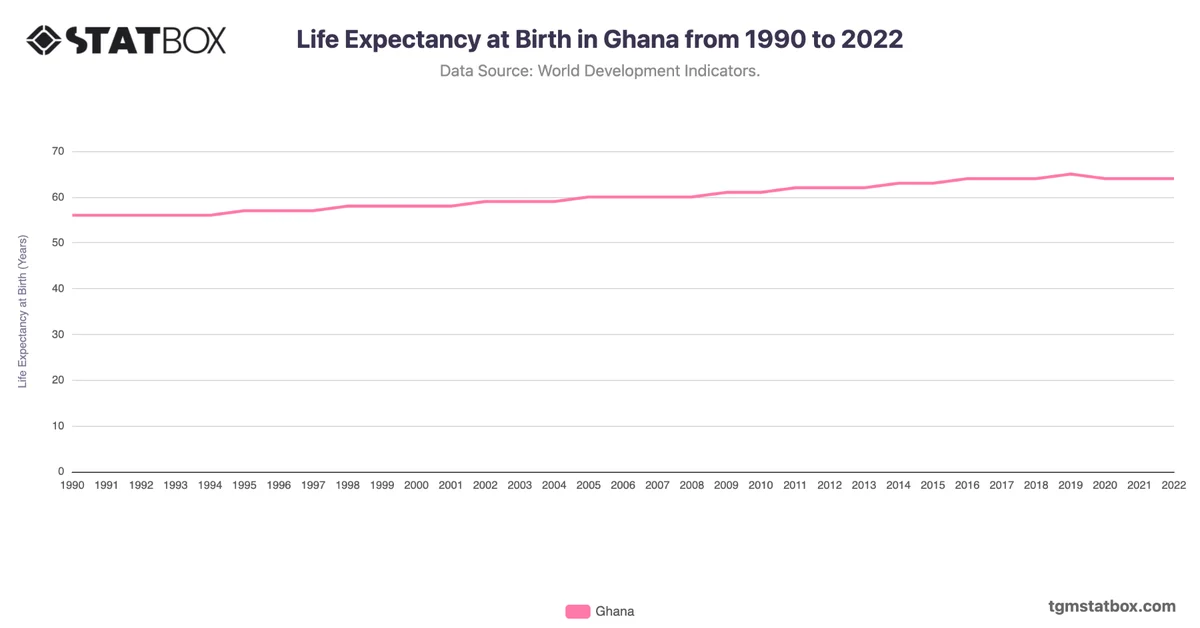
The 2000s saw further acceleration, as the country benefited from increased economic activity driven by sectors such as agriculture, services, and later, oil production. As healthcare systems improved, particularly in maternal and child health, mortality rates dropped, contributing to natural population increases. Urbanization also played a pivotal role, with many Ghanaians moving to cities like Accra and Kumasi in search of better employment opportunities, fueling the growth of urban populations.
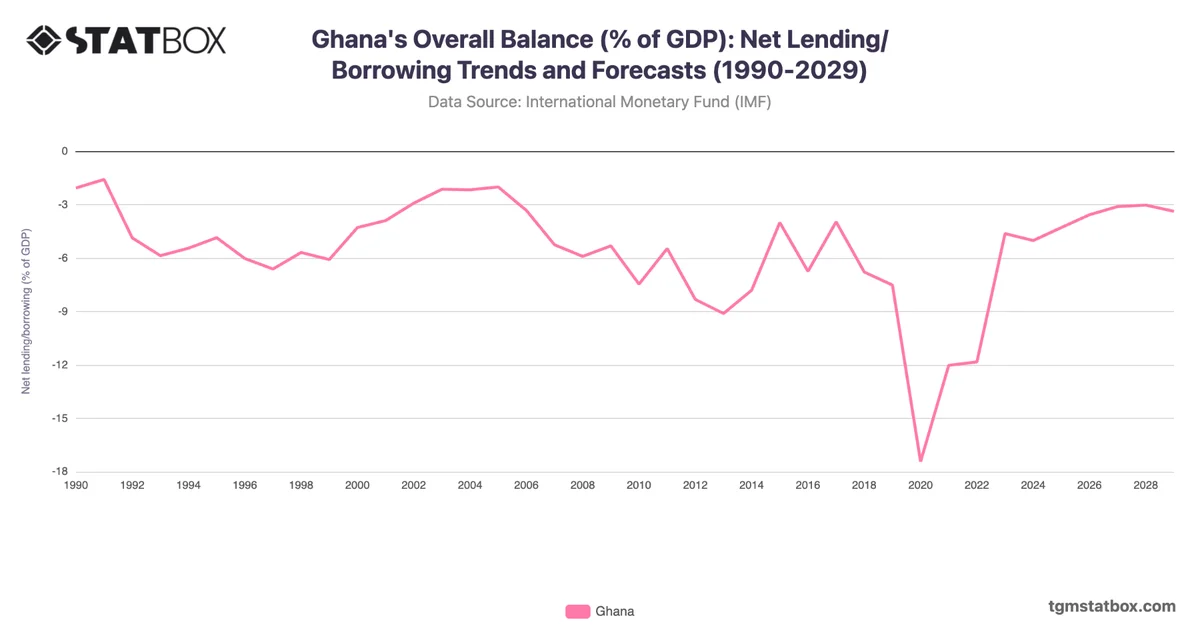
Throughout the 2010s and into the 2020s, Ghana's sustained economic growth, coupled with government initiatives aimed at poverty reduction and expanding education, helped maintain the upward population trend. While this growth presents opportunities, it also raises challenges regarding resource management, urban planning, and social services, as Ghana works to accommodate its rapidly growing population.
The 2000s saw further acceleration, as the country benefited from increased economic activity driven by sectors such as agriculture, services, and later, oil production. As healthcare systems improved, particularly in maternal and child health, mortality rates dropped, contributing to natural population increases. Urbanization also played a pivotal role, with many Ghanaians moving to cities like Accra and Kumasi in search of better employment opportunities, fueling the growth of urban populations.
Throughout the 2010s and into the 2020s, Ghana's sustained economic growth, coupled with government initiatives aimed at poverty reduction and expanding education, helped maintain the upward population trend. While this growth presents opportunities, it also raises challenges regarding resource management, urban planning, and social services, as Ghana works to accommodate its rapidly growing population.
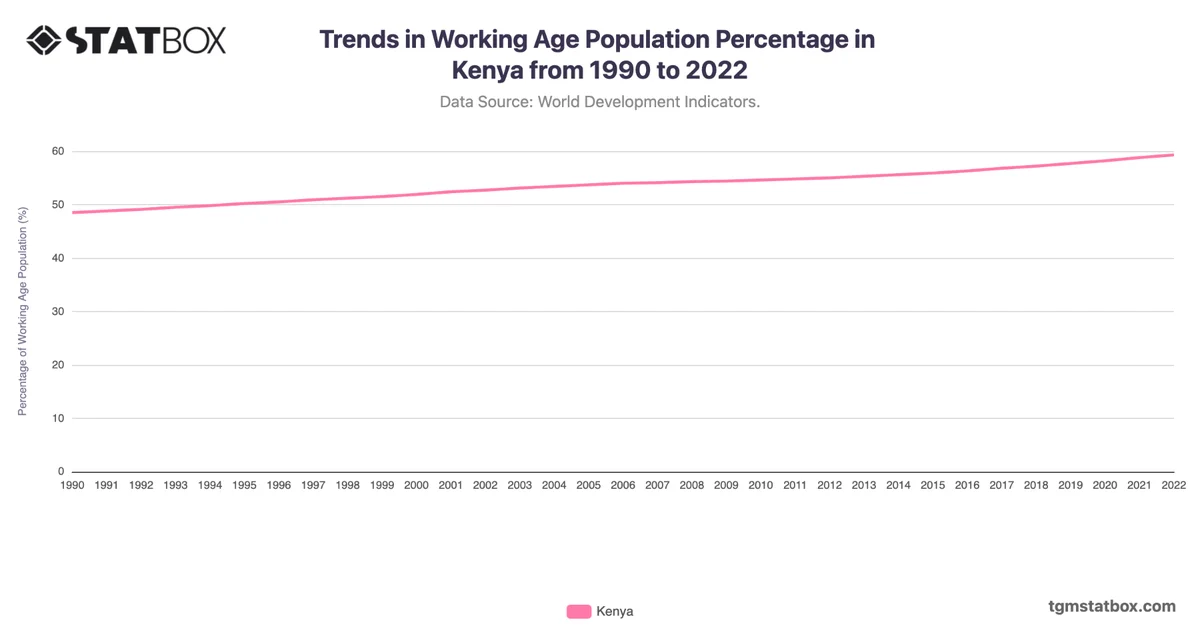
Explore related charts to gain a better understanding of Ghana’s urbanization rate, Ghana’s working-age demographic share, Ghana’s population growth rate.