In South Korea, pets are no longer simply animals sharing a home. For many owners, they are companions who bring joy, comfort and a sense of being loved. The term “furkids” reflects this closer relationship, as pets take on a place in people's everyday lives.
We can recognize this shift in the way people choose their pets, share their lives online and spend on their care. Latest TGM StatBox data from more than 1,020 South Korean respondents offers a closer look at the culture behind these relationships, from the enduring appeal of dogs to the emotional connection that keeps owners invested in their pets.
The relationship between people and pets has changed alongside modern Korean lifestyles. Smaller households, urban living and changing family structures have made companionship an increasingly relevant part of the conversation around pet ownership.
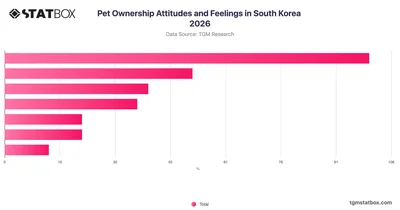
Yet the appeal of pets does not automatically translate into ownership. TGM Pet Care Insights in South Korea 2026 shows that 33% of South Koreans who do not currently own a pet say they love animals but cannot have one right now. Affection, in other words, can exist even when practical circumstances stand in the way.
For the pet industry, this distinction matters. The audience extends beyond people who already purchase pet food, accessories or care services. It also includes animal lovers whose interest has yet to translate into ownership.
Among those considering a pet, dogs remain the leading choice. South Koreans are almost twice as likely to consider getting a dog as a cat, according to the 2026 data on preferred pet types.
The preference is a useful starting point for understanding the market, but the deeper story lies in what happens after a pet becomes part of the household. For owners, the relationship is not defined by the type of animal alone. It is also shaped by the feelings and experiences that come with living together.
Read more: What Makes South Korea’s Pet Market Stand Out in APAC
What makes pets so important to their owners? The answer may be less about the practical benefits of having an animal at home and more about the emotional connection they provide.
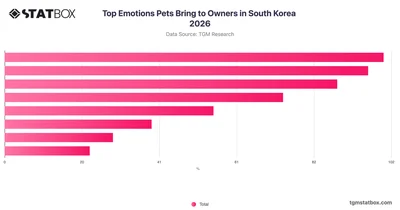
When South Korean pet owners were asked how their pets make them feel, happiness ranked first. However, the next responses reveal a relationship that goes beyond entertainment or enjoyment.
The closeness of the top three responses is particularly telling. While happiness leads, feelings of love and security follow closely behind. Pets appear to occupy an emotional space associated not only with enjoyment, but also with reassurance and connection.
This helps explain why the language surrounding pets has become more personal. Calling an animal a “furkid” reflects a relationship in which affection and care are central, rather than incidental.
At the same time, emotional connection is developing alongside broader demographic changes in South Korea. Research by the Korea Rural Economic Institute identifies the growth of single-person households, low birth rates and an aging population among the factors accompanying the expansion of pet ownership. APAC's data also tells the same story about the pet-owner relationship. These changes provide important context for understanding why companionship has become a relevant part of the pet care market, although they do not establish a direct link between household structure and individual ownership decisions.
For brands in pet care, this emotional dimension offers a different way to understand consumer decisions. Products and services may meet practical needs, but owners' expectations can also be connected to comfort, wellbeing and the desire to give their companions a good life.
The bond between people and their pets does not always stay within the home. Social media has created another space for owners to express their affection, share everyday moments and connect with people who feel similarly about animals.
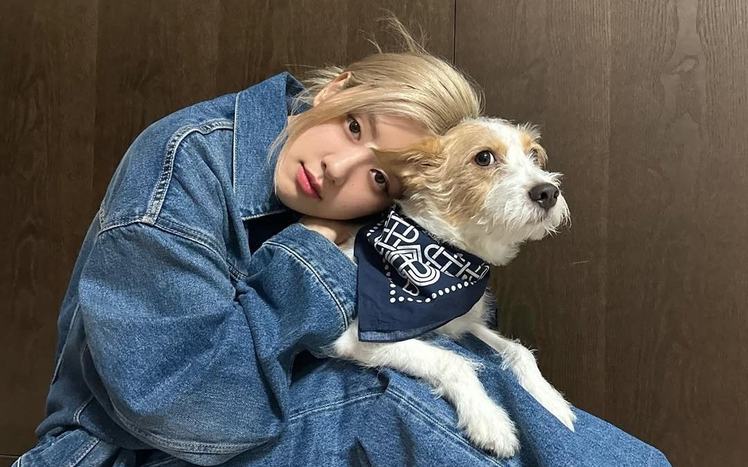
Celebrity pets and pet-focused accounts have helped make animals familiar faces in South Korea's online culture. But this behaviour is not limited to public figures. TGM StatBox data shows that 32% of South Korean pet owners share pet photos on social media.
A photo of a pet can be more than a personal snapshot. It can communicate a part of its owner's identity, invite interaction and create a connection with a wider community of animal lovers.
Blackpink’s Rosé and her rescue pup, Hank (Photo: Instagram/@roses_are_rosie):
This makes pet-related content an interesting meeting point between personal expression and consumer culture. As owners share their experiences, products, accessories and services associated with pet care can become part of the wider conversation.
For marketers, the implication is not simply that pet content attracts attention. It is that the relationship between owners and their pets provides a meaningful context for engagement. Content that reflects genuine experiences and the everyday realities of pet ownership may resonate more naturally than communication focused solely on product features.
Emotional attachment can also shape the way owners approach spending. When pets are considered part of the family, their needs become part of the household's regular purchasing decisions.
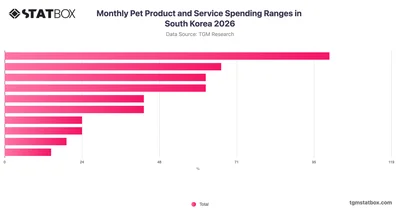
In South Korea, the most common monthly spending range on pet products and services is USD 61–80.
The spending sits within a broader pet care ecosystem that includes everyday essentials as well as specialised services and lifestyle products. Food, grooming, accessories and veterinary care each serve different needs, while owners may also seek products that make life more comfortable for their companions.
However, spending should not be viewed as a direct measure of emotional attachment. Owners face different budgets, household circumstances and care requirements. The more useful question for businesses is how these factors influence what people prioritise when choosing products and services.
South Korea's pet culture offers a useful perspective on how consumer relationships can develop around emotional needs as well as practical ones.
The data points to three connected behaviours: people show strong interest in pet companionship even when ownership is not currently possible; owners associate pets with happiness, love and security; and the relationship extends into online communities and recurring spending.
Together, these findings suggest that pet ownership is not simply a purchasing category. It is also a lifestyle and emotional context that influences how people engage with products, services and communities.
For businesses entering or expanding within South Korea's pet care market, this distinction matters. Understanding the animal people prefer is only one part of the picture. Understanding why they want a pet, what that relationship means to them and how they choose to care for it can provide a more complete view of consumer needs.
As pet culture continues to develop, the brands best equipped to respond will be those that understand both sides of the relationship: the practical responsibilities of caring for an animal and the personal connection that makes that care meaningful.
Explore more pet ownership, spending, healthcare, nutrition, technology, and lifestyle insights across APAC on TGM StatBox.
From feeling loved to sharing pet photos online, discover what South Korea’s pet culture reveals about modern lifestyles and consumer behavior in 2026.
METHODOLOGY
The survey was conducted through online interviews ( CAWI ) across 6 countries in the Asia-Pacific region, targeting a representative sample of adults aged 18 to 55+. Countries surveyed include: Indonesia, Japan, the Philippines, South Korea, Thailand, and Vietnam. This sample accurately reflects the adult population of each country in terms of gender and age distribution.
SAMPLE SIZE
Age groupings by 18-24, 25-34, 35-44, 45-54, 55+.
Country sample size: South Korea (N=1020).
Results were weighted to account for the national population structure aged between 18 and 55+.
Findings from our data, highlighting consumer behaviour, preferences, and market signals across global markets.
Follow global economic trends and market signals through clear visual stories.
The latest launches and updates from TGM StatBox.
TGM StatBox's pet care across the world behavior data and infographics in South Korea.
Consumer insights, data stories and product updates as we publish them. No other mail, and one click to leave.
Roughly two emails a month.
Our team can run the study behind the story — in 60+ countries, on your question, with the data belonging to you.
Type at least two characters to search.