For cat owners in Indonesia, good pet care starts with what goes into the bowl.
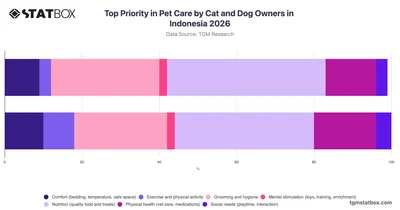
According to TGM StatBox data, 41% of Indonesian cat owners rank nutrition as the most important aspect of pet care, placing it ahead of areas such as grooming and physical health.
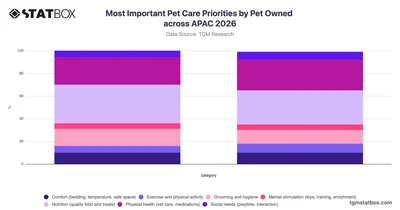
That figure sits 7 percentage points above the APAC average, suggesting that nutrition carries particular importance for Indonesian cat owners.
Their feeding habits tell a similar story. Rather than relying on one type of cat food, many owners combine different formats as part of their cats’ regular diet.
When Indonesian cat owners are asked to identify the most important aspect of caring for their pets, nutrition takes the top position.
41% rank nutrition as their number one pet care priority, indicating that what cats eat plays a central role in how owners approach their pets’ wellbeing.
Compared with cat owners across APAC, Indonesian owners place greater emphasis on nutrition, with the figure sitting 7 percentage points above the regional average.
Looking more broadly at pet care behavior across APAC can provide additional context on how pet ownership and care habits differ across the region.
For pet food brands, the strong focus on nutrition makes areas such as product quality, nutritional benefits, ingredients and suitability for different needs particularly relevant when communicating with Indonesian cat owners.
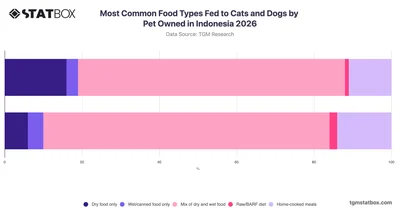
The importance placed on nutrition is also visible in what Indonesian owners put in their cats’ bowls.
According to TGM StatBox data, 69% of Indonesian cat owners feed their cats a combination of dry and wet food.
Rather than depending on a single food format, mixed feeding gives owners the flexibility to include different textures and product types within their cats’ diets. Dry food can remain part of the everyday routine, while wet food can be included alongside it.
For a broader regional view, TGM StatBox data on pet food preferences across APAC provides additional insight into the food formats pet owners choose.
The popularity of mixed feeding in Indonesia also means different food formats do not necessarily need to compete for a single place in the bowl. Wet food, pouches and complementary products can instead become part of a broader feeding routine.
Taken together, the findings point to an Indonesian cat owner audience that places strong importance on nutrition while already showing openness to multiple food formats.
For brands operating in wet food, pouches, meal toppers or complementary feeding products, the opportunity can lie in showing how these products fit naturally into an existing mixed-feeding routine.
The food itself is only one part of the picture. Understanding where pet owners shop for food and supplies can provide additional context on how brands reach consumers, while data on how much pet owners spend across APAC each month adds another layer to understanding purchasing behavior.
For cat food brands looking at Indonesia, the combination of a strong nutrition mindset and widespread mixed feeding offers a useful starting point for understanding where different products can fit within the everyday feeding habits of cat owners.
The TGM Indonesia Pet Care Insights 2026 study is based on a quantitative online survey conducted in Indonesia to understand pet owners’ attitudes, behaviors, and expectations across key areas of pet care. The study covers adults aged 18–55+ and explores topics including pet nutrition, health and veterinary care, ownership and lifestyle, services and accessories, and pet technology, providing a broad view of how consumers care for their pets and make related purchase decisions.
Findings from our data, highlighting consumer behaviour, preferences, and market signals across global markets.
Follow global economic trends and market signals through clear visual stories.
The latest launches and updates from TGM StatBox.
TGM StatBox's pet care across the world behavior data and infographics in Indonesia.
Consumer insights, data stories and product updates as we publish them. No other mail, and one click to leave.
Roughly two emails a month.
Our team can run the study behind the story — in 60+ countries, on your question, with the data belonging to you.
Type at least two characters to search.