Sustainability can mean very different things in daily life. Some actions are easy to recognize as environmentally responsible because people see or practice them regularly. Others have a less obvious connection with sustainability.
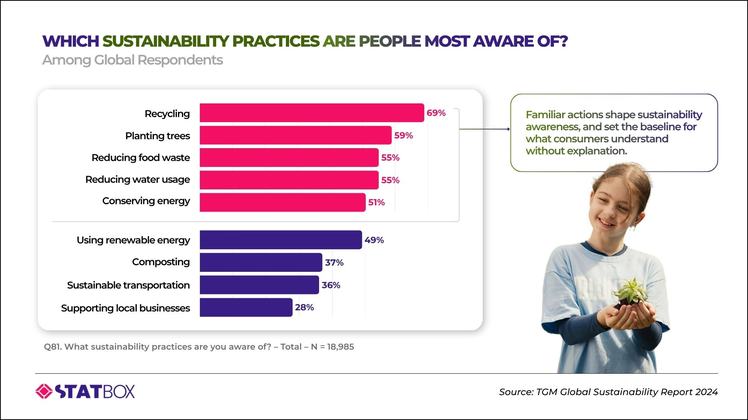
TGM Research’s Sustainability Insights 2024 reflects this pattern. In our survey of 18,985 respondents across 34 countries, we asked which sustainability practices people were aware of, and respondents showed the strongest awareness of familiar, everyday actions such as recycling, planting trees and reducing food waste.
Familiar everyday actions have the strongest awareness
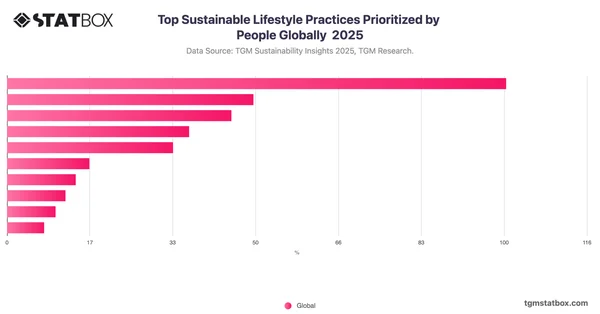
Recycling stands out at 69%, followed by planting trees at 59% and reducing food waste at 55%.
These practices sit close to everyday life. Recycling and reducing food waste happen around routine household decisions: what people throw away, what they separate into bins, what food they keep and what they discard. Planting trees is less of a daily habit, yet it is highly familiar through schools, community activities, public campaigns and green spaces people see around them.
That familiarity helps explain why they are easier to recognize as sustainability practices. People do not need technical knowledge of circular economies or carbon emissions to understand the basic environmental value behind them.
Why does recycling stand out?
Recycling is one of the few sustainability practices people are asked to think about again and again in everyday life. Every time someone throws away a bottle, opens a package or sees separate waste bins, there is a small reminder that materials can be sorted rather than simply discarded.
That repeated exposure makes a difference. Recycling also gives people a very clear role: identify the material, choose the right bin and separate it from general waste. Compared with ideas such as renewable energy or sustainable transport, the connection between the action and its environmental purpose feels much more immediate.
The scale of the waste problem keeps reinforcing that message. UNEP projects municipal solid waste to rise from 2.1 billion tonnes in 2023 to 3.8 billion tonnes by 2050. As waste volumes grow, recycling continues to appear in packaging instructions, local collection systems, schools and public campaigns, which helps keep the practice familiar across different parts of daily life.
That also explains an important difference between awareness and action. People can easily recognize recycling as sustainable because the idea is familiar, while actually recycling still depends on access, convenience and knowing what belongs in each waste stream.
Why do some sustainability practices feel less obvious?
At the lower end, sustainable transportation is recognized by 36%, while supporting local businesses sits at 28%.
Both examples suggest that awareness tends to fall when the environmental benefit is less direct or depends more on context.
With transportation, people can choose walking, cycling, or public transport mainly because of cost or convenience. Lower emissions are an environmental benefit, yet they are not always the first reason people associate with those choices.
The link is even less obvious with local businesses. People may think first about supporting their community or local economy, while the sustainability benefit depends on factors such as sourcing, transport distance and how the business operates. In other words, people may not immediately see how the action connects to sustainability.
That helps explain the gap in awareness. People tend to recognize sustainability more easily when the connection between what they do and the environmental result is simple, visible and easy to understand.
If these practices are part of a sustainability message, the implication is straightforward: do not assume the environmental connection is already obvious — explain it.
When sustainability awareness starts to affect real business decisions
Awareness also shapes how easily people understand sustainability in a commercial context. When an environmental idea already feels familiar, people need less explanation to see how a product feature or business initiative connects with sustainability.
Once sustainability begins to influence purchasing decisions and business planning, that familiarity affects how clearly you can explain your actions. You may invest in greener packaging or cleaner transport, yet those efforts become harder to communicate when consumers cannot immediately see the environmental benefit behind them.
For businesses, the awareness gap can influence several practical decisions:
The economic relevance becomes clearer as sustainability becomes more closely connected with regulation and everyday consumption. Public understanding can influence how easily new practices are accepted and how much explanation businesses need to provide.
So, awareness does not determine adoption, but it shapes how easily people understand why a sustainable choice is worth considering.
If you want to look beyond awareness, explore more sustainability charts on TGM StatBox to see how sustainable attitudes connect with everyday practices and environmental behaviour.
 Premium
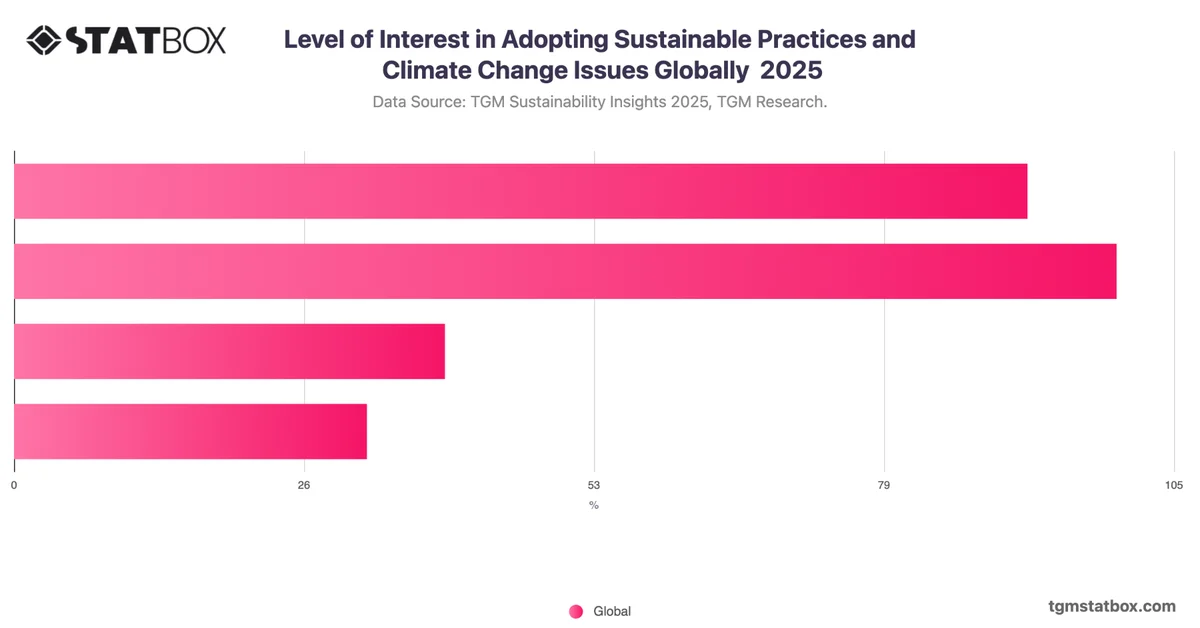
Level of Interest in Adopting Sustainable Practices and Climate Change Issues Globally 2025
Premium
Level of Interest in Adopting Sustainable Practices and Climate Change Issues Globally 2025
 Premium
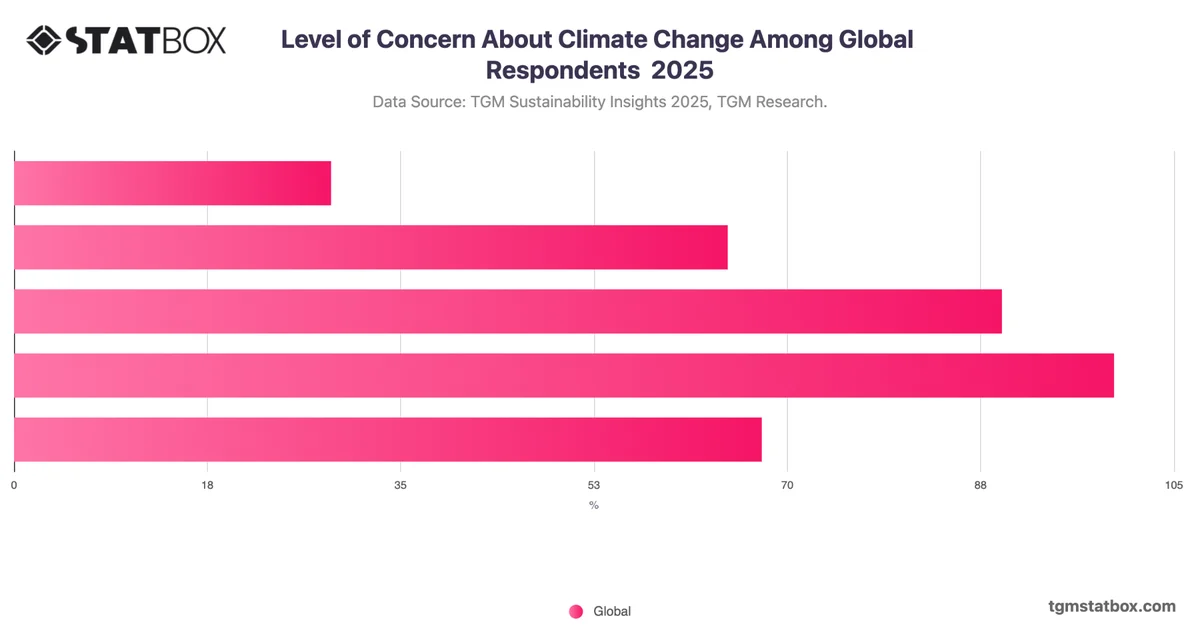
Level of Concern About Climate Change Among Global Respondents 2025
Premium
Level of Concern About Climate Change Among Global Respondents 2025
 Premium
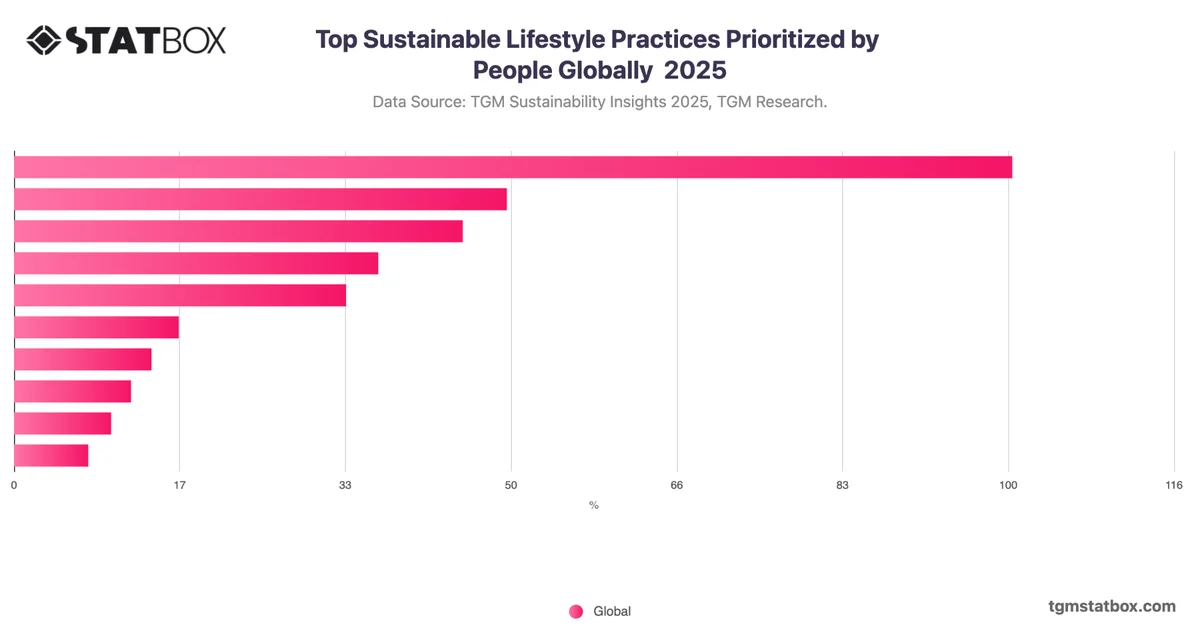
Top Sustainable Lifestyle Practices Prioritized by People Globally 2025
Premium
Top Sustainable Lifestyle Practices Prioritized by People Globally 2025
 Premium
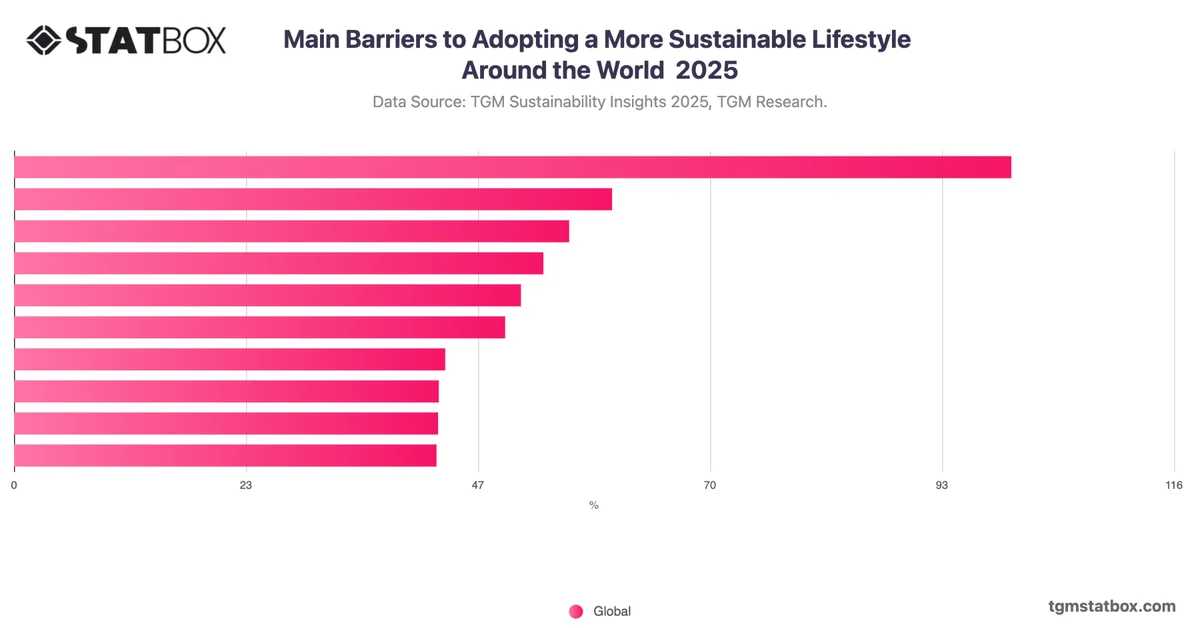
Main Barriers to Adopting a More Sustainable Lifestyle Around the World 2025
Premium
Main Barriers to Adopting a More Sustainable Lifestyle Around the World 2025
Methodology
The TGM Global Sustainability Report 2024 is based on a large-scale quantitative survey conducted across 34 countries, targeting a representative sample of adults aged 18 to 55+. Designed to uncover how people think, feel, and act on sustainability issues, the survey explores sustainable behaviors, climate concerns, everyday eco-practices, and barriers to action for 2024.
Survey Methodology: online interviews (CAWI – Computer-Assisted Web Interviewing)
Sample Size: 18,985 participants
Age Groups: 18–24, 25–34, 35–44, 45–54, 55+
Country Coverage: Austria, Belgium, France, Germany, Ireland, Netherlands, Poland, Portugal, Romania, Serbia, Spain, Switzerland, Turkey, UK, Ukraine, Argentina, Brazil, Chile, Colombia, Mexico, Peru, Australia, India, Indonesia, New Zealand, Philippines, Singapore, Thailand, Vietnam, Nigeria, South Africa, Saudi Arabia, UAE, USA.
Data Weighting: Results have been weighted to reflect national demographics for accurate market representation.
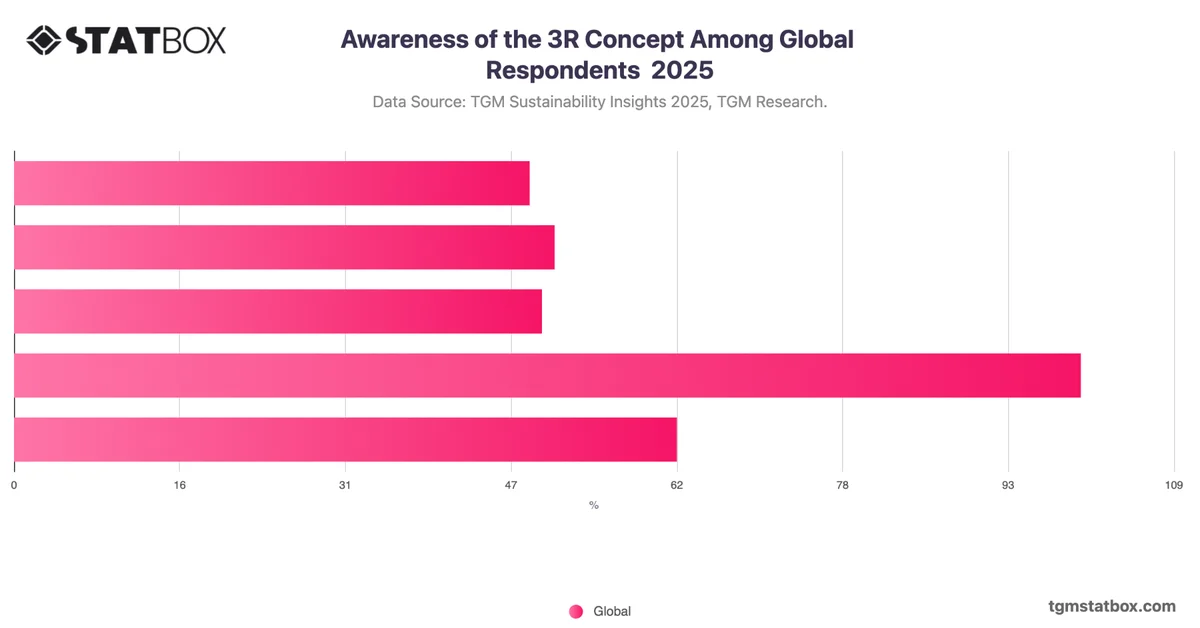
According to the TGM Sustainability Insights 2025 report, this chart shows which sustainability practices people are most aware of globally, with familiar everyday actions standing out more strongly than less obvious sustainability choices.
Findings from our data, highlighting consumer behaviour, preferences, and market signals across global markets.
Follow global economic trends and market signals through clear visual stories.
The latest launches and updates from TGM StatBox.
TGM StatBox's global sustainability attitudes & behavior data and infographics across Global markets.
Consumer insights, data stories and product updates as we publish them. No other mail, and one click to leave.
Roughly two emails a month.
Our team can run the study behind the story — in 60+ countries, on your question, with the data belonging to you.
Type at least two characters to search.