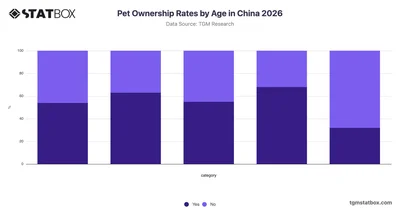
For many Gen Z owners, pets are no longer viewed only as animals that need food, shelter, and basic care. As pet ownership becomes popular among younger consumers, the emotional bond they form with their pets is stronger than ever.
TGM StatBox data on how young pet owners in China describe their pets shows a relationship that goes well beyond basic care.
In this article, Gen Z findings primarily refer to respondents aged 18–24, depending on the age bands available in each TGM study. Where broader age groups such as 25–34 are shown, we identify them separately rather than treating the entire group as Gen Z.
The idea of pets as "just animals" is losing ground with younger consumers. According to TGM Pet Care Ownership Insights 2026 in China, 57% of Chinese pet owners aged 18–24 see their pets as family members (N=102). Among pet owners aged 25–34, 49% also see their pets as family members (N=231).
When pets cross the line from standard animals to family members, household budgets shift accordingly. Purchases go from necessities to premium pet food, routine health checkups, grooming subscriptions, and smart technology.
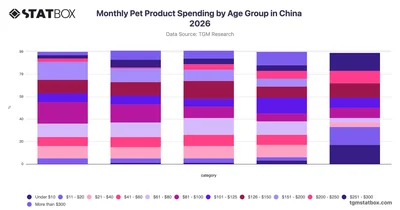
According to TGM StatBox data, young pet owners aged 18–24 represent the highest proportion of big spenders, leading all age groups in the $81–$100 monthly spending range. For Gen Z, spending on their fur babies is often driven by emotion rather than budget constraints, making higher bills an expected investment in their pets' well-being.
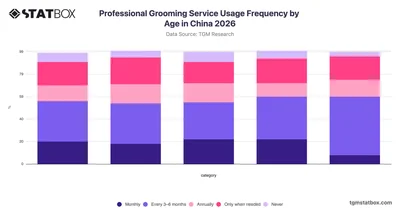
So, where is that money actually going? Data in TGM China Pet Care Insights 2026 showed that spending extends well beyond basic food and supplies into high-value professional services. Among all services, grooming is a top priority, with 36% of Chinese Gen Z (aged 18–24) paying for monthly care.
This premium spending peaks during high-demand periods when owners seek specialized care. From grooming to health checkups and holiday care, spending is clearly shifting toward services that offer convenience, professional expertise, and a higher quality of life for their pets.
For brands, the opportunity lies not simply in how many young consumers own pets, but in what those pets mean to them. When it comes to "fur babies", purchase decisions can extend beyond basic care.
Real growth is in category expansion. Brands should position services like health checkups, grooming subscriptions, or boarding not as optional extras, but as essential investments in their pet's long-term well-being.
Emotional framing is also a retention lever, not just an acquisition hook. Once a brand is trusted with a pet's wellbeing, owners are less likely to swap providers for a small discount, as long as the relationship feels like it's care rather than commodity. That makes emotionally anchored brands stickier.
The risk can be overplaying emotion without substance. Gen Z is quick to call out care-washing; wellbeing language slapped on a product with no real design or health benefit behind it. The data shows the emotional bond is real, but it raises the bar for brands to back up the message with genuine product quality.
Explore the full data behind this story. Sign up for a free StatBox account to unlock the complete Pet Care Ownership charts and reports, and track how consumer attitudes toward pets are evolving across China and APAC.
New TGM data shows that Chinese Gen Z pet owners prioritize emotional connection over price tags, expecting higher bills as they invest heavily in routine health checkups, grooming, and high-end pet products.
The TGM China Pet Care Insights 2026 study is based on a quantitative online survey conducted in China to understand pet owners’ attitudes, behaviors, and expectations across key areas of pet care. The study covers adults aged 18–55+ and explores topics including pet nutrition, health and veterinary care, ownership and lifestyle, services and accessories, and pet technology, providing a broad view of how consumers care for their pets and make related purchase decisions
Findings from our data, highlighting consumer behaviour, preferences, and market signals across global markets.
Follow global economic trends and market signals through clear visual stories.
The latest launches and updates from TGM StatBox.
TGM StatBox's pet care across the world behavior data and infographics in China.
Consumer insights, data stories and product updates as we publish them. No other mail, and one click to leave.
Roughly two emails a month.
Our team can run the study behind the story — in 60+ countries, on your question, with the data belonging to you.
Type at least two characters to search.