Virtual and robotic pets are creating new ways for consumers to experience companionship without some of the responsibilities associated with traditional pet ownership.
For companies developing pet technology, understanding which features matter most can help clarify what consumers are actually looking for. Convenience, interaction, emotional connection, and ease of ownership can all influence whether these products feel relevant in everyday life.
TGM StatBox data looks at the virtual and robotic pet features consumers in China consider most important, providing a closer view of the benefits that could shape future product interest.
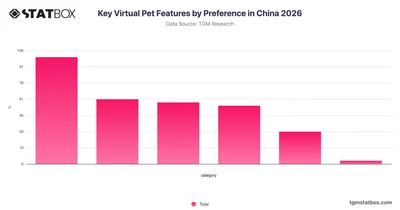
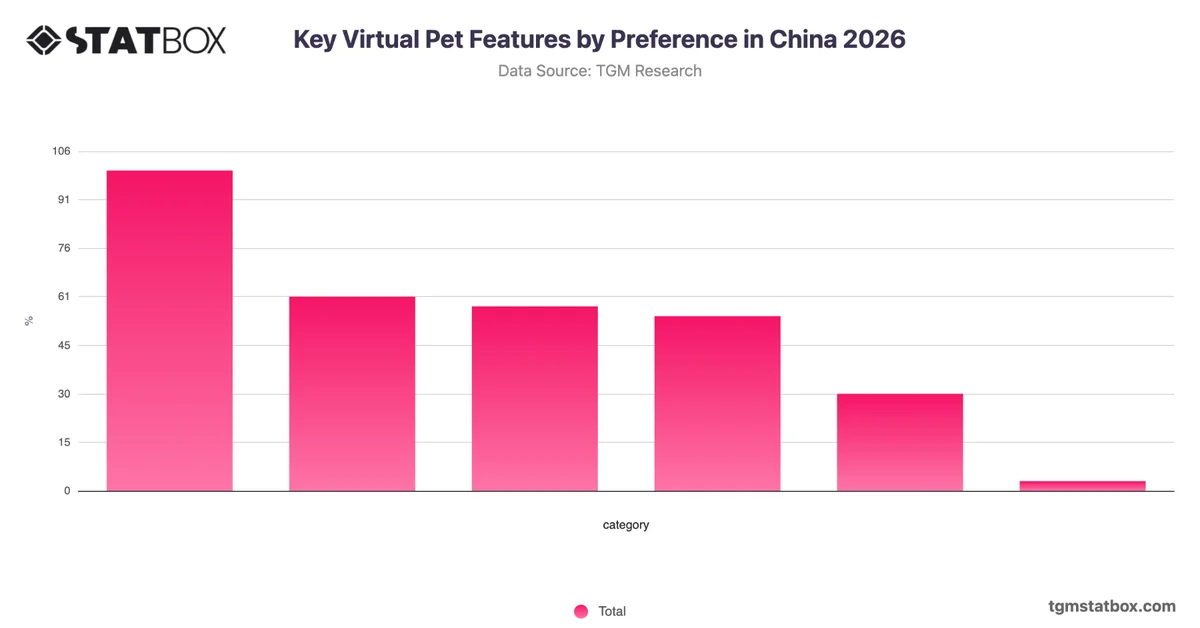
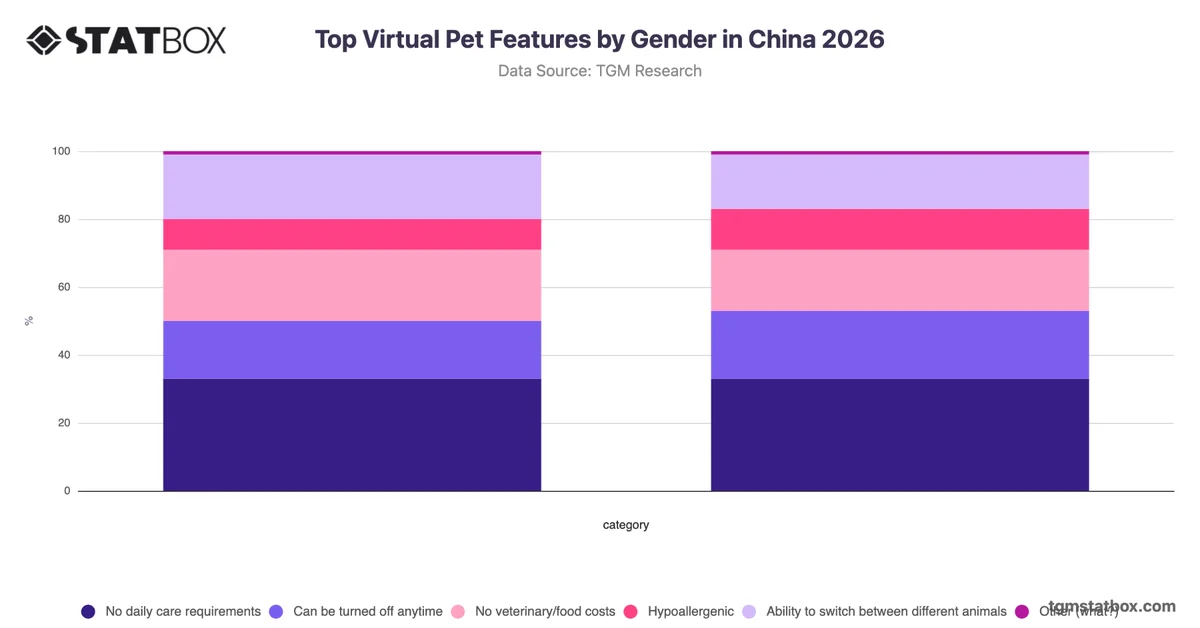
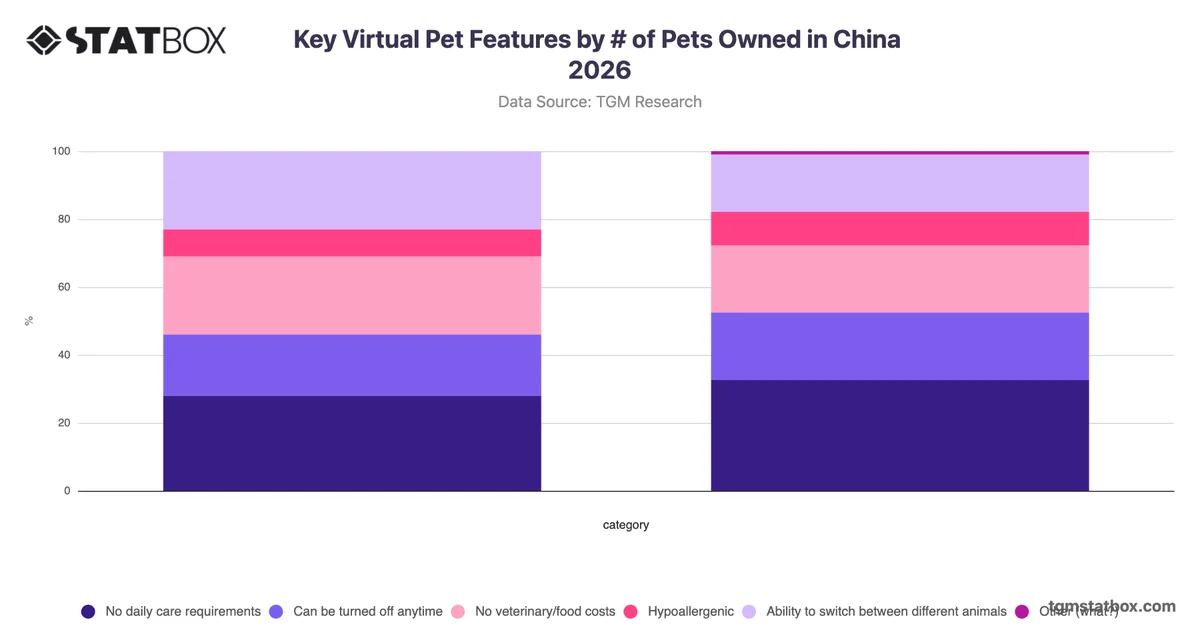
Among consumers in China, 33% say having no daily care requirement is an important feature when considering a virtual or robotic pet.
The result suggests that convenience is a central part of the appeal. Unlike traditional pets, virtual or robotic alternatives can provide interaction or companionship without feeding schedules, cleaning, grooming, or other recurring responsibilities.
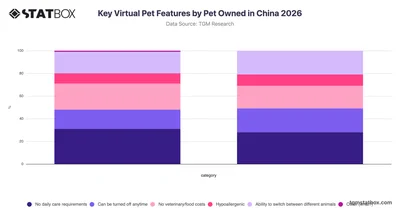
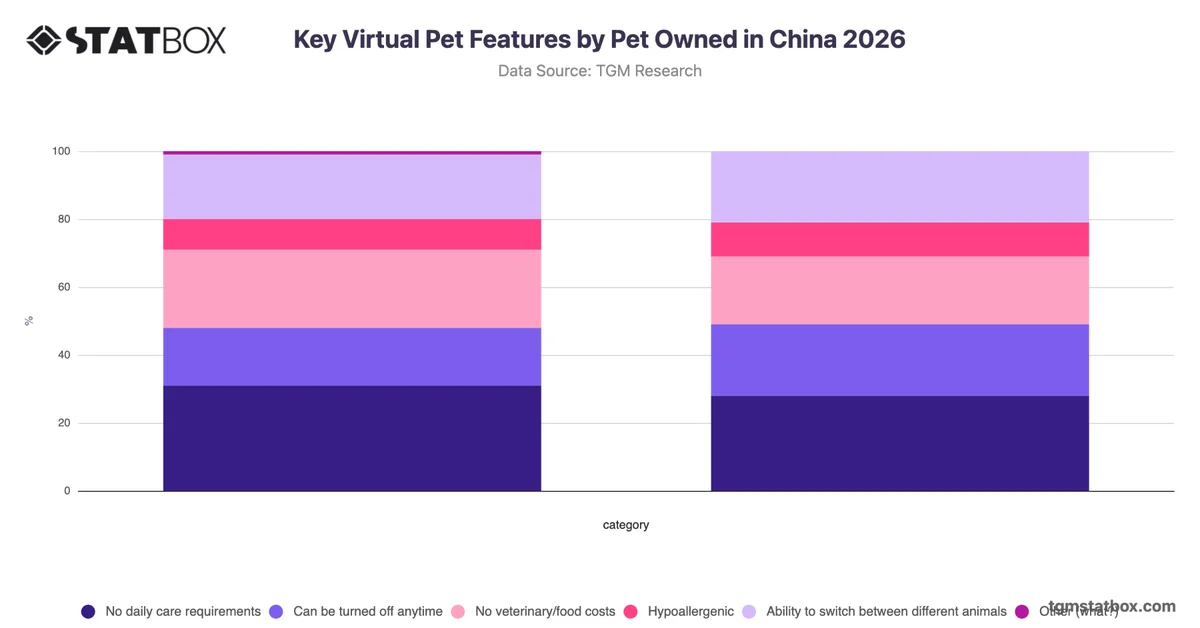
No daily care requirement also ranks as the leading preference among both dog and cat owners, suggesting that the appeal of lower-maintenance companionship extends to people who already have experience caring for pets.
For consumers with busy routines, limited living space, or lifestyles that make traditional pet ownership difficult, this lower level of commitment can make virtual pets more attractive.
The preference for no daily care suggests that convenience is an important part of the virtual pet experience. Consumers can be attracted not only by interactive technology, but also by the ability to enjoy companionship without the everyday responsibilities of caring for a real pet.
Product positioning can therefore focus on practical benefits such as low maintenance, flexibility, and easy integration into everyday routines.
For brands, this creates an opportunity to position virtual or robotic pets around convenience while still delivering the interaction and companionship consumers expect from the category.
For product developers, the data can help guide both feature prioritization and messaging.
A strong virtual pet proposition does not necessarily need to replicate every aspect of traditional pet ownership. Features that reduce effort while still creating a sense of interaction and connection can be equally important to the overall experience.
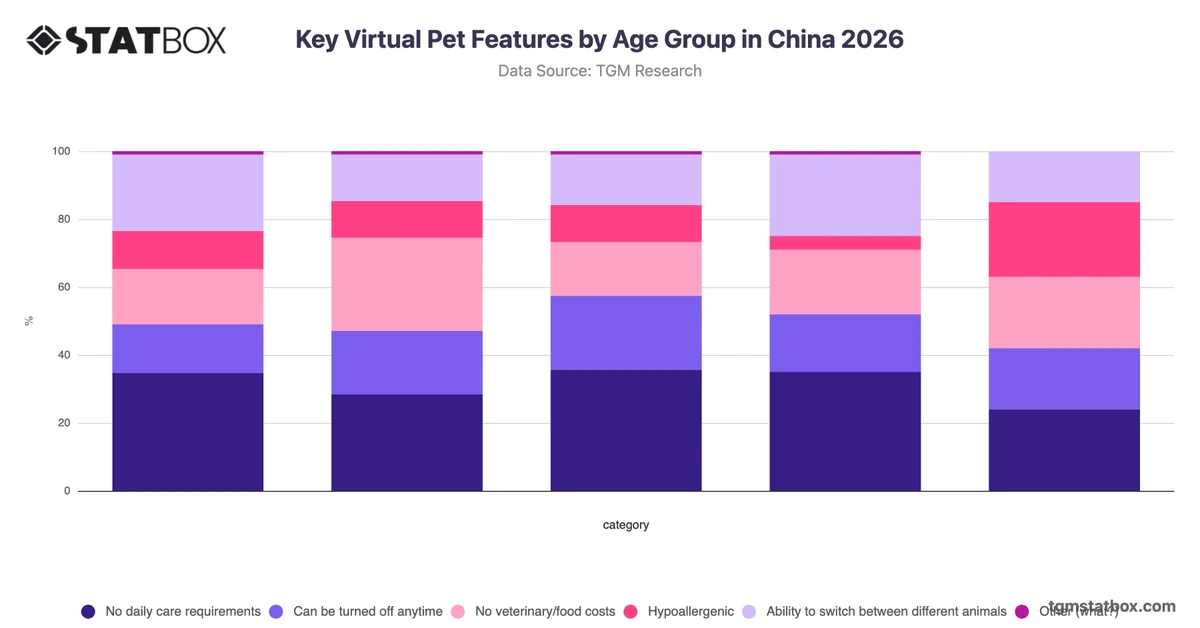
Brands can use these preferences to support decisions around product design, target audiences, communication, and the balance between emotional engagement and practical convenience. For more targeted audience planning, looking at preferences by age group can also help identify which features matter most to different consumer segments.
For a deeper understanding of how consumers in China view pet technology and future pet care, browse TGM StatBox stats to access more consumer data, demographic breakdowns, and market-level findings across pet care, technology, and changing ownership behaviors.
For a broader view of the trends shaping pet care across the region, discover the Special Report: Pet Care Trends in APAC & China 2026 for more insights into consumer behavior, technology, spending, and changing pet owner expectations.
The TGM Pet Care Insights in China 2026 – Technology study is based on a quantitative online survey conducted in China to examine consumer attitudes, behaviors, and expectations around pet care technology. The study covers adults aged 18–55+ and focuses on technology adoption, barriers, and future expectations among pet owners.

Findings from our data, highlighting consumer behaviour, preferences, and market signals across global markets.
Follow global economic trends and market signals through clear visual stories.
The latest launches and updates from TGM StatBox.
TGM StatBox's pet care across the world behavior data and infographics in China.
Consumer insights, data stories and product updates as we publish them. No other mail, and one click to leave.
Roughly two emails a month.
Our team can run the study behind the story — in 60+ countries, on your question, with the data belonging to you.
Type at least two characters to search.