Pet ownership is everywhere in Asia-Pacific, but the region does not behave as one market. That was the core message TGM Research brought to Shanghai on August 20, 2026, when Tatiana Masalska-Laska (CXO) and Thuyen Vu (CMO) presented. "Data-driven Insights on the Latest Pet Care Trends in APAC" at the Pet Fair Asia 2026.
Using APAC as a benchmark, the session took a closer look at China pet market. The picture that emerged is a market that buys like a mature one: owners spend more, choose quality, and adopt technology faster than their regional peers. Here are the key differences, drawn from TGM Pet Care Insights 2026.
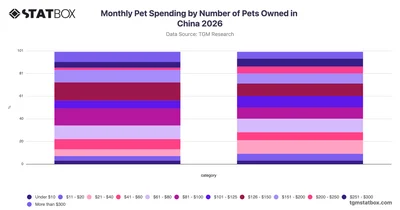
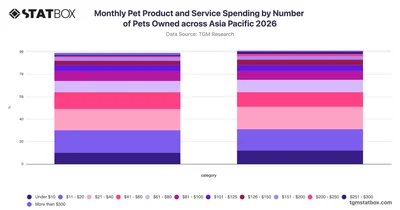
Spending is where China pulls furthest away from the region. Half of Chinese pet owners spend more than $100 a month on their pets. Across the rest of APAC, the most common monthly budget sits between $11 and $40.
The gap is still widening. Chinese owners report that their pet spending has risen 45% compared with the previous year. So what are they spending on? Analysis in TGM's article about China’s growing pet spend indicates that budgets are moving into services: 20% use professional grooming every month and 17% visit a vet monthly.
A playbook built on APAC averages will underprice China. Chinese owners are not just buying more of the basics; they are paying for a fuller care routine.
In many APAC markets, price still decides the purchase. In "What makes Thai owners different from the rest of APAC", Thailand is the most price-conscious of the seven markets, with 49% of owners saying price matters most.
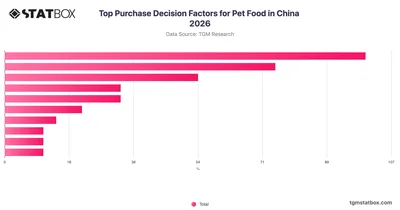
China sits at the other end. Quality ranks first when Chinese owners choose pet food, scoring 19 percentage points higher than price, which ranks only fourth.
The same mindset shows up in health. Half of Chinese owners used regular veterinary care in the past 12 months, the most-used pet health service, followed by pet insurance. Care in China is shifting from treating problems to preventing them.
For premium and clinical brands, China rewards proof of quality more than discounts. Ingredient transparency, vet endorsement and preventive health messaging are likely to work harder here than price promotions.
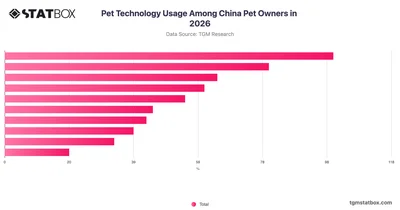
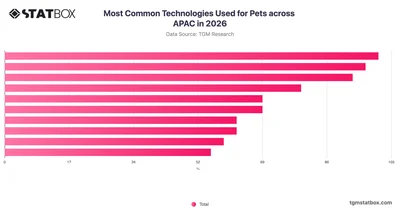
Pet tech is already part of daily life in China. 51% of Chinese owners use smart feeders or water fountains, the most widely adopted pet tech category.
Interest in what comes next is also high. Chinese owners are also interested in AI-powered health monitoring apps, the leading future pet care service tested. While across APAC, we only found that 40% of owners are interested in health-monitoring devices. China goes further on more experimental ideas too: more than 70% would consider a virtual or robotic pet to keep their pet company while they are away.
Cost is not the main barrier. Chinese owners hesitate mostly over whether their pet will respond well to a device, and over privacy and data security. Tech brands entering China need to prove that their product is safe and works for the animal, not just that it is affordable.
New to StatBox? Create your free TGM StatBox account to save charts to Favorites and get insights like these every week.
On emotional attachment, China and the rest of APAC look alike. 47% of Chinese owners call their pets family members, close to 50% across APAC. 62% of Chinese owners describe their bond as very strong, while across APAC, 47% say emotional support and stress relief is what pets give them most.
That similarity matters, because it means the bond does not explain the spending gap above. Owners across the region feel much the same about their pets. What sets China apart is how that feeling turns into action: a $100+ monthly budget, regular vet care, insurance and smart devices.
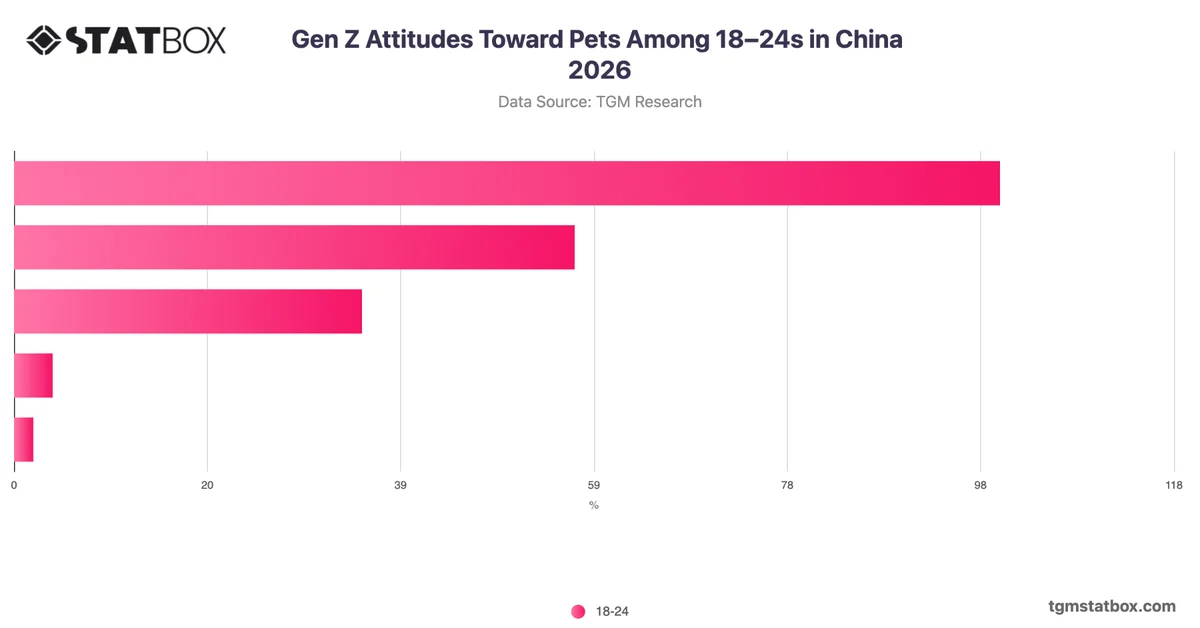
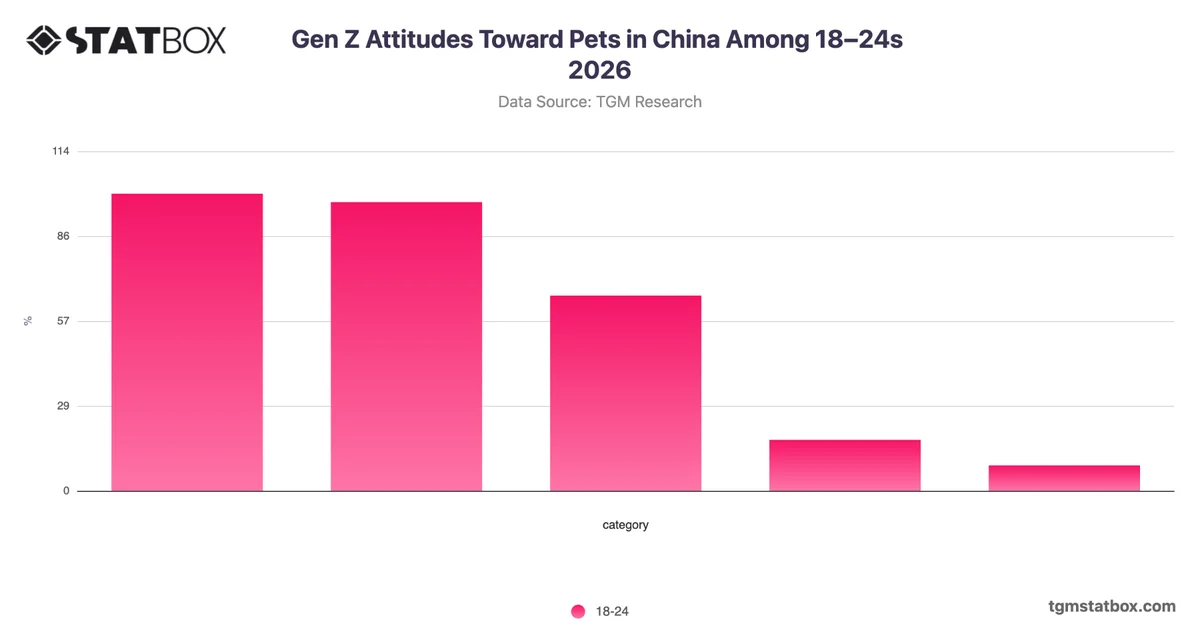
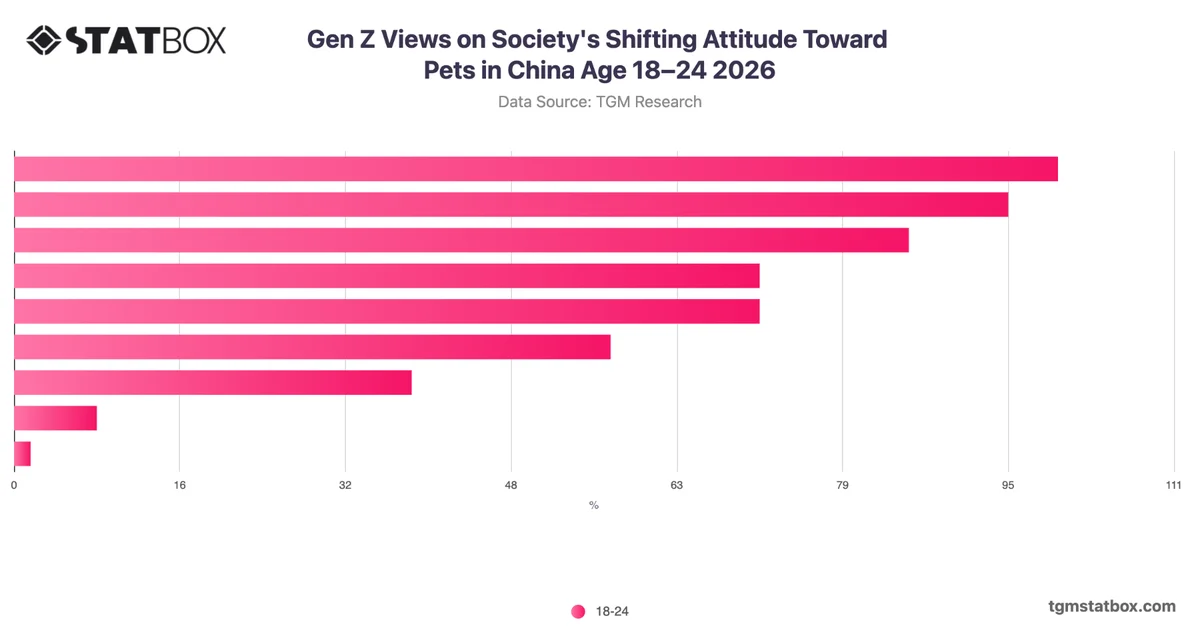
The bond is moving only among younger owners. In China, 57% of owners aged 18–24 and 49% of those aged 25–34 see their pets as family, above the 47% average for all Chinese owners. As this generation gains spending power, the family framing in China could pull ahead of the APAC level.
For brands, emotional messaging alone will not stand out in China, because every APAC market shares it. What wins is showing how a product turns that bond into better care, with proof of health benefits, quality and convenience.
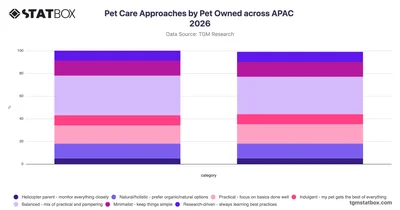
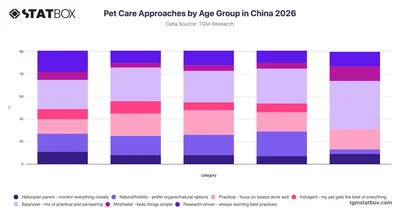
Care style is also where owners differ more than in how much they love their pets. Across APAC, approaches range from minimalist maintenance to intensive, research-led management, shaped by personal values, lifestyle and the needs of each pet type. See how care styles split between cat and dog owners in Pet Care Approaches by Pet Owned across APAC 2026 (N=4,543).
One segment stood out in the Shanghai session: Chinese female pet owners. They may not be the largest group of pet owners in China, but they could be among the most influential in purchase decisions and technology adoption.
TGM mapped six key traits that describe how these women think, spend, connect with their pets and adopt technology. The full portrait, with data for each trait, is available in the Special Report: Pet Care Trends in APAC & China 2026.
China is part of APAC, but it should not be planned like the APAC average. For foreign brands, the data points to six moves.
The lesson is the same one the Shanghai session opened with: there is no single APAC consumer. Regional strategies need market-level data, and China needs its own playbook.
Read more about China market: The Growing Influence of Pet Creators in China
From Pet Fair Asia 2026: half of Chinese pet owners spend $100+ a month vs $11-40 in APAC. See how China differs on quality, care and tech.
The findings come from TGM APAC Pet Care Insights 2026, a primary online (CAWI) survey by TGM Research conducted in two phases.

Findings from our data, highlighting consumer behaviour, preferences, and market signals across global markets.
Follow global economic trends and market signals through clear visual stories.
The latest launches and updates from TGM StatBox.
TGM StatBox's pet care across the world behavior data and infographics across Asia Pacific markets.
Consumer insights, data stories and product updates as we publish them. No other mail, and one click to leave.
Roughly two emails a month.
Our team can run the study behind the story — in 60+ countries, on your question, with the data belonging to you.
Type at least two characters to search.