A packed itinerary, early morning departures, and a long list of attractions to visit. For some travelers, that's the perfect holiday. For others, the idea of a vacation is much simpler: a chance to slow down, get some rest, and enjoy time away from everyday responsibilities.
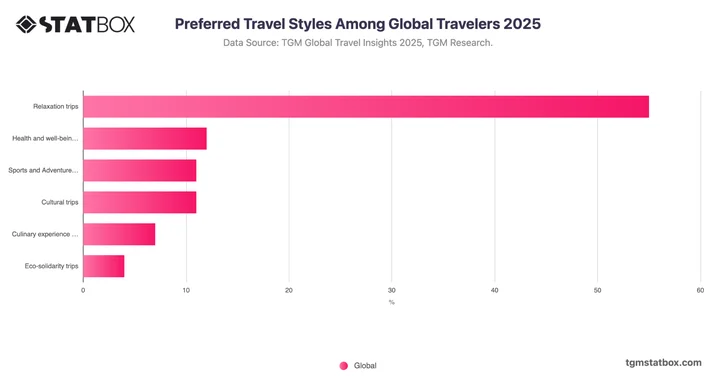
According to TGM Global Travel Insights 2025, 55% of global travelers prefer relaxation-focused trips, making it the most popular travel style among more than 21,000 respondents across 21 markets.
The finding raises an interesting question: when people have limited time to travel, why do so many prefer to spend it doing less?
Travel offers different experiences depending on what people want from their time away. Some look for adventure and new discoveries, while others prefer cultural activities or wellness experiences. Yet relaxation remains the leading preference globally.
Data from TGM StatBox's Preferred Travel Styles Among Global Travelers 2025 shows that 55% of respondents favor relaxation trips, well ahead of health and well-being trips (12%), cultural trips (11%), and adventure trips (11%).
The gap suggests that rest and comfort remain central to how many consumers imagine their ideal holiday.
However, choosing relaxation doesn't necessarily mean spending the entire trip at a resort or avoiding activities altogether. A relaxing vacation can still include sightseeing, local food experiences, or time outdoors. The difference often comes down to pace, with travelers having more freedom to decide how much they want to do each day.
For destinations and hospitality providers, understanding that distinction is important. Travelers looking to unwind can still be interested in experiences, provided those activities fit comfortably into their holiday.
Daily responsibilities, work schedules, and constant connectivity can leave little room for uninterrupted personal time. Holidays offer an opportunity to temporarily step away from those demands.
Rather than filling every day with activities, some travelers prioritize flexibility, familiar comforts, and opportunities to rest without feeling rushed.
This preference is particularly noticeable among older travelers. According to TGM Research's analysis of global traveler personas, 62% of respondents aged 55 and above prefer relaxation-focused trips, compared with 55% globally.
For this audience, a comfortable pace can be just as important as the destination itself. Convenient accommodation, manageable travel schedules, and easy access to leisure activities can all contribute to a more enjoyable experience.
Yet the appeal of relaxation extends beyond older generations. Across age groups, the desire for time away from daily routines gives travel providers an opportunity to consider how different consumers define a genuinely restful holiday.
A slower travel style doesn't have to mean an uneventful vacation.
Consider a beach holiday. Some travelers enjoy spending the morning by the water before exploring local restaurants in the evening. Others prefer quiet nature walks, casual sightseeing, or spending more time in one destination rather than moving between several locations.
These experiences can satisfy the desire for both relaxation and discovery without requiring a packed schedule.
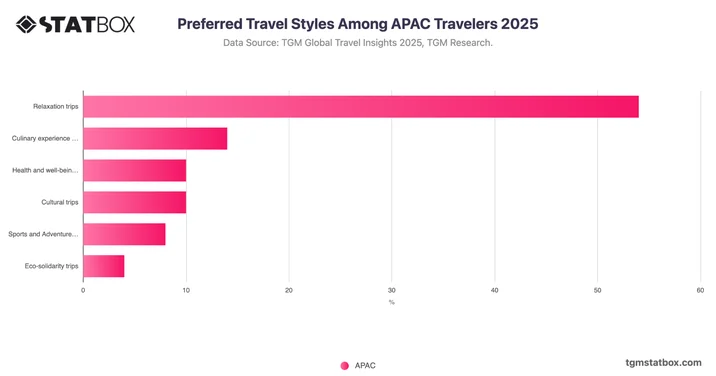
Regional preferences also illustrate how rest can sit alongside other travel interests. According to TGM StatBox's travel style data for Asia Pacific, 54% of APAC travelers prefer relaxation trips, while 14% favor culinary experiences, twice the global average of 7%.
This suggests that destinations can appeal to relaxation-oriented travelers while also highlighting local experiences that add variety to their stay.
For travel businesses, the opportunity lies in offering choices rather than assuming every visitor wants the same itinerary. A flexible holiday package with optional cultural activities, food experiences, or wellness services can accommodate different preferences without overwhelming the traveler.
With relaxation being the most preferred travel style globally, hotels, resorts, tour operators, and destination marketers have an opportunity to better address travelers' expectations for comfort, flexibility, and downtime.
For accommodation providers, this can mean highlighting peaceful surroundings, convenient facilities, and spaces where guests can unwind. Tour operators can offer customizable itineraries that balance organized activities with free time, allowing travelers to enjoy experiences without feeling rushed.
Destination marketers can also emphasize the variety of ways visitors can relax, from quiet countryside retreats and beachside resorts to city breaks with fewer scheduled activities.
Ultimately, understanding what relaxation means to different groups of travelers can help businesses develop more relevant offerings and communicate their value more effectively.
With 55% of global travelers favoring relaxation trips in 2025, rest remains a major consideration in travel preferences. The appeal of doing less points to a broader range of consumer needs, from comfort and flexibility to having more control over how holiday time is spent.
For travel brands, understanding these preferences can help inform accommodation offerings, itinerary design, and destination marketing. A memorable trip doesn't always require more activities. Sometimes, giving travelers the freedom to do less can be just as valuable.
Want to explore more about what drives travel decisions? Discover the Global Travel Insights Report on TGM StatBox for more data on travel preferences, booking behavior, accommodation choices, and consumer trends across international markets.
The TGM Global Travel Insights 2025 study is based on a large-scale quantitative survey conducted across 21 countries, targeting a representative sample of adults aged 18 to 55+. Designed to uncover global travel behavior trends and insights for 2025, the survey explores popular destinations, shifting booking habits, digital discovery channels, and experience preferences across key traveler segments.

Findings from our data, highlighting consumer behaviour, preferences, and market signals across global markets.
Follow global economic trends and market signals through clear visual stories.
The latest launches and updates from TGM StatBox.
TGM StatBox's global travel trends and insights data and infographics across Global markets.
Consumer insights, data stories and product updates as we publish them. No other mail, and one click to leave.
Roughly two emails a month.
Our team can run the study behind the story — in 60+ countries, on your question, with the data belonging to you.
Type at least two characters to search.