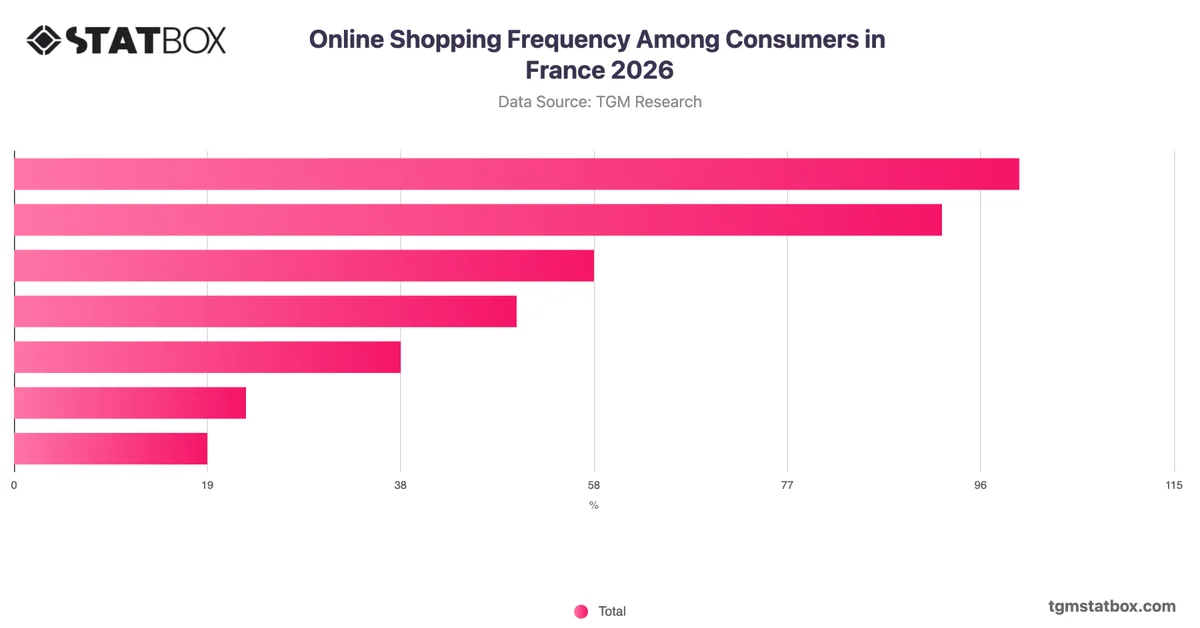
Online shopping has become a regular part of consumer life in France, but not every product category attracts the same level of demand.
For retailers, this raises an important question: which categories remain less commonly purchased online, and what might that mean for brands competing in those spaces?
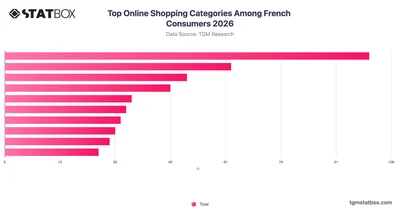
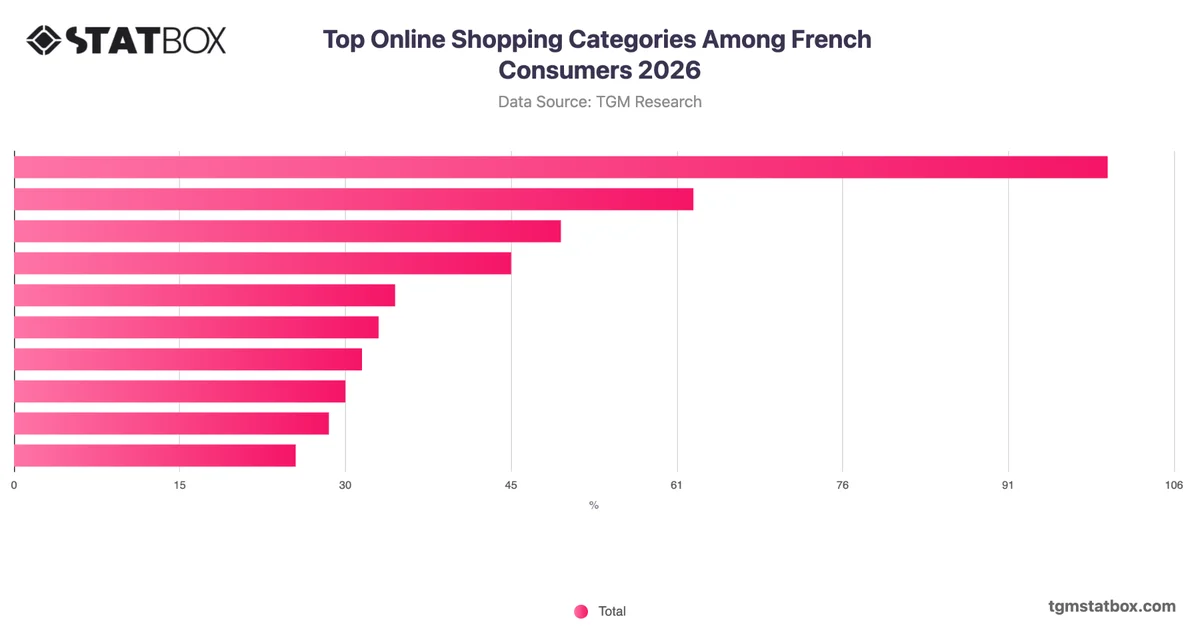
TGM StatBox data shows that just 8% of consumers in France purchase baby or kids products online, placing the category among the less commonly purchased product categories online.
For baby and kids products, the shopping journey can involve more consideration than in categories that are easier to purchase online. Items such as clothing, strollers, toys, or baby equipment can be difficult to assess through a screen, especially when shoppers want to check materials, size, comfort, or overall quality before making a decision.
This need for closer product evaluation can help explain why online purchasing remains relatively limited in the category. Physical stores can still play an important role by allowing consumers to see, touch, and compare products in person before buying.
For brands in the baby and kids category, online strategies should focus on giving consumers greater confidence in products they cannot assess in person.
Detailed product descriptions, clear sizing information, high-quality images and videos, customer reviews, and transparent material or safety information can help shoppers evaluate products more easily online. Brands can also use omnichannel touchpoints, such as click-and-collect or in-store product viewing, to support consumers who prefer to inspect products before completing a purchase.
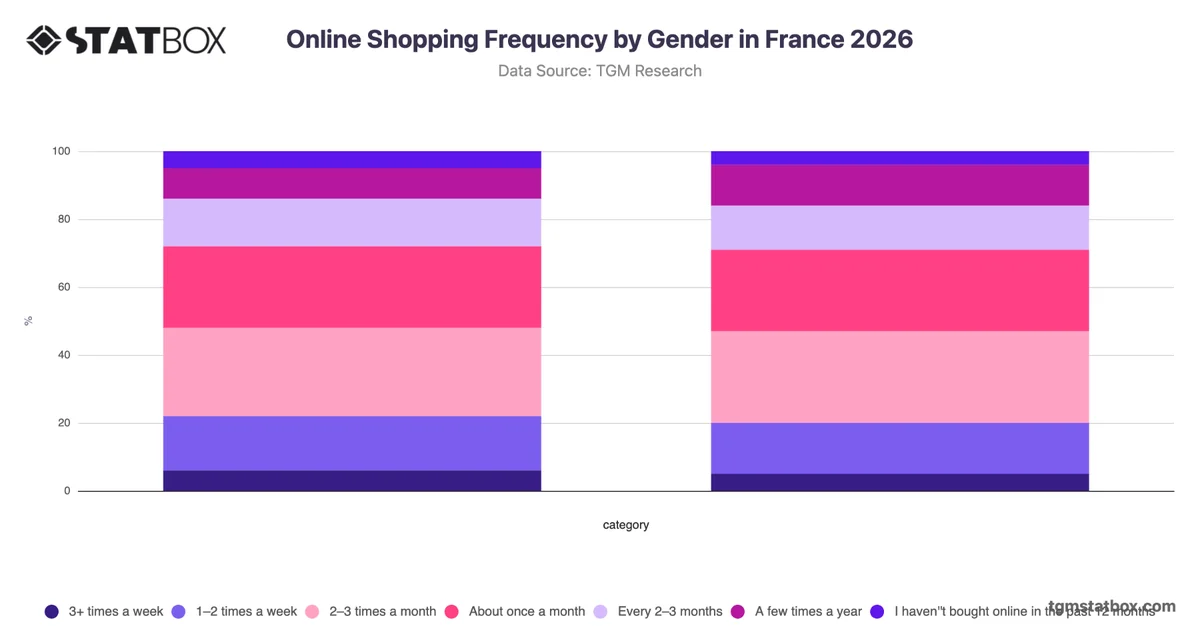
The data featured in this article comes from TGM Research's E-commerce Insights 2026 study in France, based on responses from more than 7,000 online shoppers across seven markets and exploring their shopping habits, preferred channels, and purchase frequency.
For brands looking to better understand online shopping behavior in France, these findings offer a starting point for identifying where digital demand is strongest and where additional purchase barriers can still exist. Visit the TGM StatBox charts to explore more detailed data points and demographic breakdowns across France’s e-commerce market.
Explore more e-commerce insights across markets to better understand how different consumer groups shop online.
The TGM E-commerce Insights 2026 study is based on a large-scale quantitative survey conducted across multiple countries worldwide, designed to capture consumer shopping patterns, user frequency, and decision drivers in 2026. The study provides comparable, country-level data to support market assessment, localization, and strategic planning for e-commerce platforms, retailers and brands.
Data Weighting: Results have been weighted to reflect national demographics for accurate market representation.

Findings from our data, highlighting consumer behaviour, preferences, and market signals across global markets.
Follow global economic trends and market signals through clear visual stories.
The latest launches and updates from TGM StatBox.
TGM StatBox's global e-commerce trends and insights data and infographics in France.
Consumer insights, data stories and product updates as we publish them. No other mail, and one click to leave.
Roughly two emails a month.
Our team can run the study behind the story — in 60+ countries, on your question, with the data belonging to you.
Type at least two characters to search.